What the Water Carried: Jersey City's Industrial Pollution Legacy and the Communities Left to Reckon With It
There is a particular kind of forgetting that cities practice when prosperity and poison arrive together. For Jersey City, the Hudson River and its tributary waterways were, throughout the better part of the twentieth century, both the engine of industrial ambition and the repository of its refuse. Chemical runoff, heavy metals, petroleum byproducts, and untreated effluent flowed with near-impunity into the Kill Van Kull, the Hackensack River, and the Hudson itself. Official city histories, when they addressed the waterfront at all, tended to celebrate the tonnage moved and the industries sustained. They rarely paused to account for what was left behind in the sediment.
This is an attempt to begin that accounting.
The Industrial Waterfront as Chemical Corridor
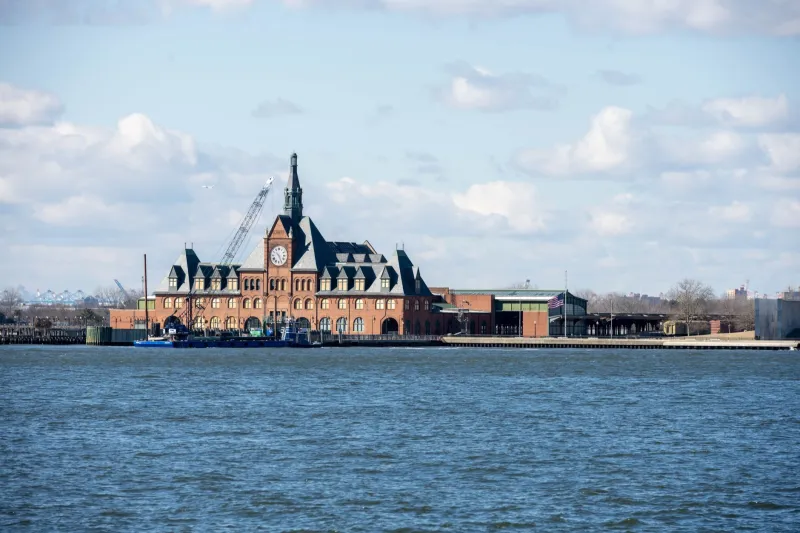
By the early decades of the twentieth century, Jersey City's waterfront had become one of the most intensively industrialized stretches of shoreline on the Eastern Seaboard. Petroleum refineries, chemical processing plants, paint manufacturers, and metal fabricators crowded the banks of the Hudson from Communipaw Cove northward through the rail yards of the Central Railroad of New Jersey terminal. Each facility discharged, with varying degrees of regulatory oversight—and for many decades, virtually none—directly into the water or onto land that drained into it.
Archival records held at the New Jersey State Archives and the Jersey City Free Public Library's New Jersey Room document complaints filed as early as the 1920s by commercial fishermen and waterfront workers regarding discolored water, fish kills, and skin irritations attributed to chemical exposure. These complaints were rarely acted upon in any systematic way. The regulatory architecture that might have compelled industrial accountability simply did not exist in meaningful form until the passage of the federal Clean Water Act in 1972—and even then, enforcement in heavily industrialized corridors like Jersey City's waterfront was slow and contested.
Chromium contamination stands as perhaps the most extensively documented chapter in this history. The processing of chromite ore at facilities operated by the Mutual Chemical Company and its successors left behind hundreds of thousands of tons of chromium ore processing residue scattered across dozens of sites throughout Jersey City. Chromium, particularly in its hexavalent form, is a recognized carcinogen. For decades, this residue was used as fill material beneath homes, playgrounds, and streets—a practice that continued well into the 1980s before state regulators began to grasp its full dimensions.
Normalization and Its Human Cost
What is perhaps most striking, when one reviews oral histories collected by local preservation organizations and academic researchers, is the degree to which waterway contamination was absorbed into the texture of ordinary life. Longtime residents of the Greenville and West Side neighborhoods recall swimming in waters that left rashes on their skin, catching fish that tasted of petroleum, and accepting the acrid smell that drifted inland from the riverbanks as simply the odor of a working city.
One oral history transcript, collected as part of a community documentation project in the early 2000s, records a former dockworker's matter-of-fact description of the Hudson's condition in the 1950s: "You didn't drink it. You didn't eat what came out of it if you could help it. But it was the river. It was always there, and so was the smell."
This normalization was not merely a failure of individual perception. It was, in significant measure, actively cultivated. Industrial employers, civic boosters, and municipal officials consistently framed environmental degradation as an acceptable trade-off for employment and tax revenue. Communities that raised objections—frequently working-class neighborhoods with limited political leverage—found their concerns absorbed into the bureaucratic machinery of city government and returned to them as reassurances rather than remediation.
The public health consequences of this arrangement have been difficult to quantify with precision, in part because the recordkeeping necessary to establish causation was itself subject to the same institutional indifference that permitted the pollution in the first place. What epidemiological research has been conducted in affected Jersey City neighborhoods suggests elevated rates of certain cancers and respiratory conditions consistent with long-term exposure to industrial contaminants. The full human cost remains, in the most literal sense, unrecorded.
Real Estate, Remediation, and the Geography of Accountability
The relationship between industrial contamination and real estate in Jersey City is a study in how environmental harm is distributed and, eventually, how its remediation is monetized. For much of the mid-twentieth century, awareness of waterfront contamination suppressed property values in adjacent neighborhoods, concentrating low-income and immigrant populations in areas bearing the heaviest environmental burden. This pattern—now recognized by environmental justice scholars as a consistent feature of American industrial geography—was not accidental. It reflected the cumulative effect of zoning decisions, lending practices, and municipal investment priorities that channeled industrial land uses toward communities with the least capacity to resist them.
The waterfront transformation that began in earnest during the 1980s and accelerated through the 1990s and 2000s introduced a new dynamic. As luxury residential development made contaminated waterfront parcels enormously valuable, the economics of remediation shifted. Developers and state agencies undertook cleanup efforts that had languished for decades—not primarily because the communities most affected by contamination had finally secured redress, but because the land beneath the contamination had become worth cleaning. The distinction matters.
New Jersey's Brownfields and Contaminated Site Remediation Act, enacted in 1993, provided a legal framework for this process, establishing procedures for site assessment and cleanup that were often tied to redevelopment agreements. Critics of the program, including environmental advocacy organizations active in Hudson County, argued that cleanup standards were sometimes calibrated to the anticipated end use of a site rather than to the most protective levels feasible—meaning that land destined for commercial or industrial reuse was frequently remediated to less stringent standards than land slated for residential development, even when neighboring communities remained exposed.
The Archive as Evidence
For historians and community advocates alike, the documentary record of Jersey City's industrial water pollution is both vast and incomplete. Environmental impact assessments, state agency inspection reports, corporate correspondence, and legal filings from remediation proceedings constitute an enormous body of evidence—but one that is dispersed across multiple repositories, partially restricted, and in some cases actively suppressed during litigation. The Jersey City Free Public Library, Rutgers University's special collections, and the New Jersey Department of Environmental Protection's public records office each hold pieces of this archive, but no single institution has undertaken the systematic work of assembling them into a coherent historical account.
That work remains to be done. And the urgency of doing it is not merely academic. Chromium contamination sites continue to be identified throughout Jersey City. Sediment contamination in the Hudson River adjacent to former industrial properties remains a subject of ongoing federal Superfund oversight. Residents of neighborhoods built on or near former industrial fill continue to navigate the uncertainties of exposure.
The waters that carried the waste of a century of industrial ambition have not finished delivering their testimony. The obligation of the historical record is to listen—and to ensure that what was normalized is never again permitted to be forgotten.