Beneath the Pavement: What Jersey City's Hidden Tunnel Networks Reveal About the City Below the City
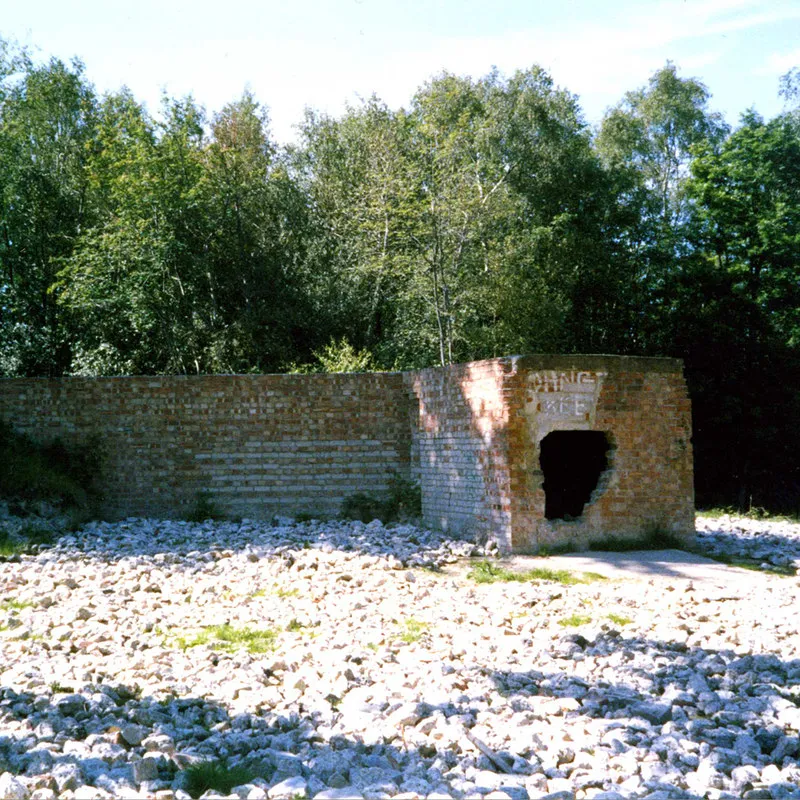
Photo: M Etherington , CC BY-SA 2.0, via Wikimedia Commons
Jersey City has always been a city of movement. Goods, people, and ideas have flowed through it in volumes that once rivaled any port on the Eastern Seaboard. Yet the most consequential flows were sometimes those that occurred entirely out of sight. Beneath the cobblestones, the reinforced concrete, and the layers of urban sediment lies a network of tunnels and subterranean passages whose histories are as complex as the city that grew above them.
For generations, these underground corridors served industrial, municipal, and occasionally illicit purposes. Some were constructed with meticulous engineering precision; others were improvised in haste. Together, they constitute an alternative map of Jersey City—one drawn not by surveyors but by necessity.
The Industrial Foundations
The earliest documented utility tunnels beneath Jersey City date to the latter half of the nineteenth century, when the rapid expansion of manufacturing and rail infrastructure created an urgent demand for subsurface corridors. Steam lines, gas mains, and later electrical conduits required protected channels that could run beneath heavily trafficked streets without disruption to commerce above ground.
The waterfront district, in particular, generated considerable subterranean construction activity. Warehouse complexes along the Hudson required direct connections to rail yards, and in several documented cases, enclosed underground passages were constructed to allow the movement of goods—particularly perishables and bonded cargo—without exposure to weather or the pilfering that plagued open dock operations. The Central Railroad of New Jersey's terminal complex, one of the most significant transit hubs on the East Coast during its peak years, relied on an elaborate network of service tunnels to manage the extraordinary volume of freight and passenger traffic it processed daily.
Archival records held at the New Jersey State Archives and the Jersey City Free Public Library's New Jersey Room contain engineering surveys and municipal permits referencing these corridors, though documentation is fragmentary. Many passages were constructed by private industrial interests with little obligation to file comprehensive public records, leaving historians to reconstruct their extent from indirect evidence.
Prohibition and the Underground Economy
No chapter of Jersey City's tunnel history has attracted more popular fascination—or generated more historical uncertainty—than the Prohibition era. Between 1920 and 1933, the Eighteenth Amendment transformed the city's already robust underground economy into something considerably more elaborate.
Jersey City occupied a strategically advantageous position for bootlegging operations. Its proximity to the Hudson River provided access to smuggling routes from Canada and the Caribbean, while its dense industrial infrastructure offered cover for distribution networks. The political machine of Mayor Frank Hague, which dominated the city through much of the twentieth century, maintained a famously transactional relationship with organized crime interests, a dynamic that almost certainly influenced which underground activities were permitted to flourish.
Oral accounts collected by local historians in subsequent decades, as well as occasional references in federal law enforcement records from the period, suggest that several establishments in the downtown and Journal Square areas maintained cellar passages connecting adjacent properties—allowing alcohol to be moved between storage facilities without crossing open streets. Whether these passages constituted true tunnels in the engineering sense or were simply modified basement connections remains a matter of debate among researchers. The distinction matters less than what the accounts collectively suggest: that the subterranean layer of the city became a functional extension of its illicit commerce.
Certain structures demolished during the urban renewal campaigns of the 1950s and 1960s were reported by construction workers to contain sealed passages whose origins could not be immediately explained. Those accounts, largely anecdotal, have never been systematically verified—but neither have they been conclusively dismissed.
Civil War-Era Passages and the Question of the Underground Railroad
Perhaps the most historically significant—and most historically contested—dimension of Jersey City's tunnel lore concerns the antebellum period. New Jersey's position as a border state with active abolitionist communities, combined with Jersey City's role as a transit point for northward movement, has led some researchers to investigate whether the city's subterranean infrastructure played any role in the Underground Railroad.
Documentary evidence is sparse, as it is for most Underground Railroad research—secrecy was, by definition, the operative principle. However, architectural surveys of several surviving pre-Civil War structures in the Van Vorst and Paulus Hook neighborhoods have identified cellar configurations that are difficult to explain through conventional domestic or commercial use alone. Narrow connecting passages, concealed access points, and ventilation features inconsistent with standard construction practice of the period have been noted in at least two properties.
Historians urge caution in interpreting such physical evidence. Not every anomalous architectural feature signals clandestine humanitarian purpose, and the romanticization of Underground Railroad history has sometimes produced attributions that exceed the available evidence. Nevertheless, the question remains open, and it merits the kind of systematic archival and architectural investigation that has not yet been fully undertaken.
What Lies Beneath Today
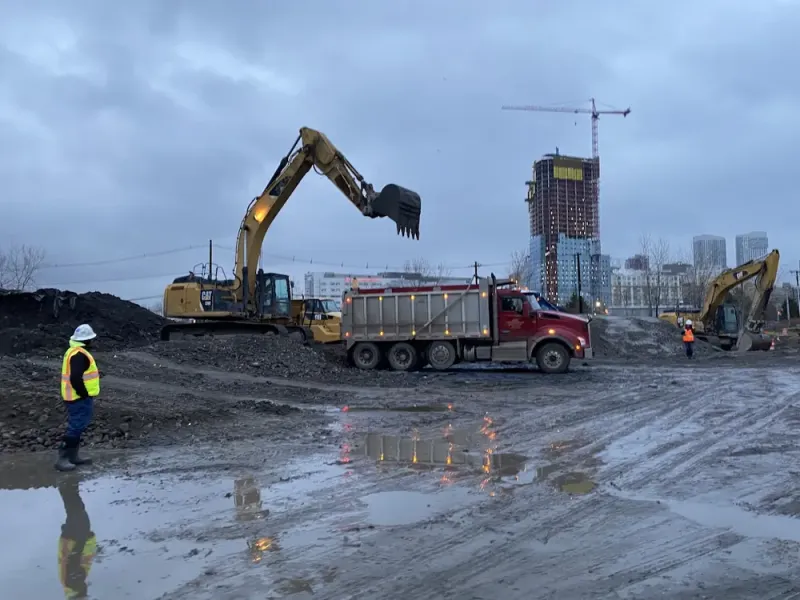
Contemporary Jersey City sits atop this accumulated subterranean history with varying degrees of awareness. Municipal infrastructure projects periodically encounter unexpected passages or sealed chambers, generating brief public interest before the demands of construction schedules redirect attention. Urban explorers have documented portions of accessible utility infrastructure, though legal and safety constraints limit systematic investigation.
The Hudson-Bergen Light Rail and PATH systems have, in the course of their construction and maintenance, produced some of the most recent encounters with older subterranean features. Engineers working on tunnel segments have occasionally reported encountering earlier construction—brick-lined passages, abandoned conduit systems, and structural remnants whose precise origins required consultation with historical records to interpret.
The preservation challenge here is not simply one of physical conservation. The tunnels themselves are largely inaccessible or structurally compromised. What can be preserved is the documentary record: the engineering surveys, the municipal permits, the oral accounts, and the architectural evidence that together allow historians to reconstruct what existed and what purposes it served.
An Invitation to Look Downward
Jersey City's surface history is rich enough to occupy researchers for generations. But the city's underground dimensions—utilitarian, subversive, occasionally heroic—demand equivalent attention. They remind us that the built environment is never simply what it appears to be from street level. Every city carries within it a vertical history as well as a horizontal one, and the passages beneath Jersey City's streets encode chapters that have yet to be fully read.
For a city that has long defined itself by movement and transformation, there is something fitting about the persistence of these buried corridors. They did not disappear when their original purposes were exhausted. They simply waited, beneath the pavement, for someone to ask the right questions.