Foundations of Erasure: Recovering the African American Craftsmen Who Built Jersey City
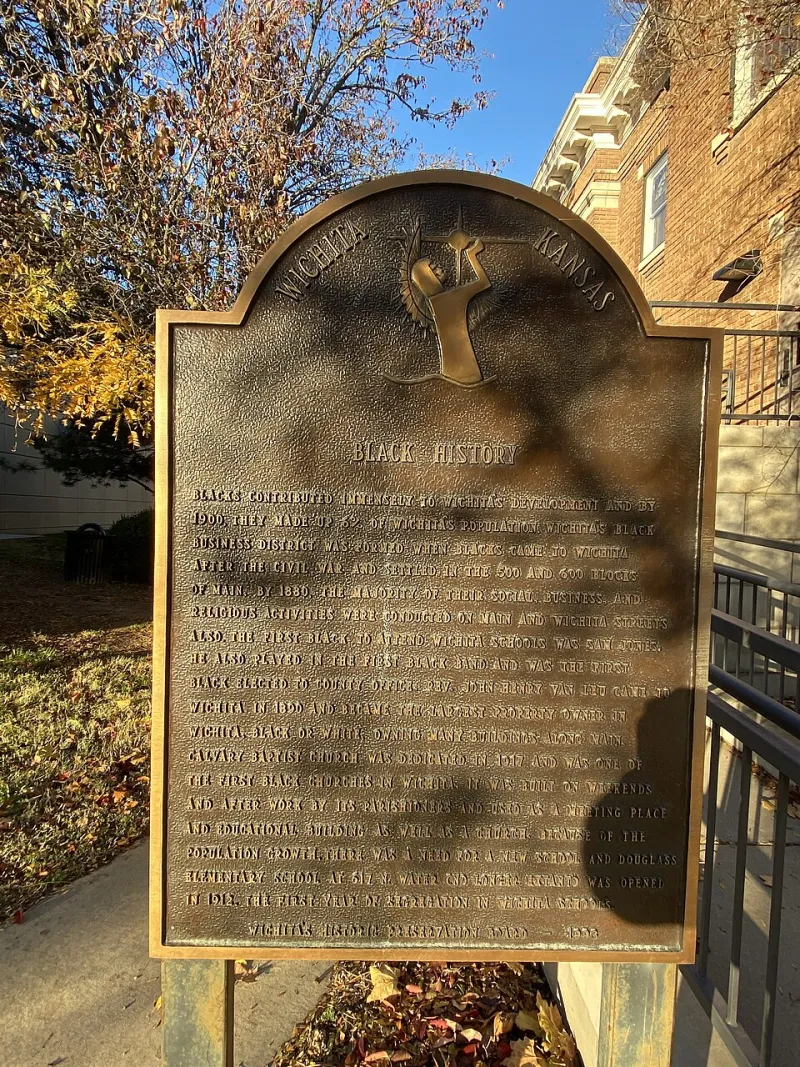
Photo: Myotus, CC BY 4.0, via Wikimedia Commons
Every brick in Jersey City tells a story. The trouble is that the city has, for most of its recorded history, been extraordinarily selective about whose stories it chooses to tell. Walk through the Van Vorst Park Historic District, past the restored brownstones of Hamilton Park, or beneath the vaulted ceilings of the institutions that anchor the Heights neighborhood, and you will encounter plaques commemorating architects, benefactors, and civic leaders. What you will almost never encounter is an acknowledgment of the African American men and women whose physical labor — and, in many cases, whose skilled craft — made those structures possible.
This is not an accident of history. It is, the archival record increasingly suggests, the result of a sustained institutional indifference that denied Black workers credit during their lifetimes and denied them commemoration after their deaths.
A Workforce Hidden in Plain Sight
The presence of African American workers in Jersey City's construction trades dates to the antebellum period, when free Black residents of Hudson County occupied a narrow but vital economic niche in the building crafts. Contemporary city directories from the 1840s and 1850s list Black residents as plasterers, carpenters, and stonecutters — trades that demanded years of apprenticeship and genuine technical mastery. These were not unskilled laborers consigned to peripheral tasks. They were craftsmen working at the center of the city's physical expansion.
By the post-Civil War decades, as Jersey City absorbed waves of European immigration and experienced the explosive industrial growth that would define its late-nineteenth-century character, African American workers found themselves in a paradoxical position. Demand for construction labor was enormous, yet access to formal union membership — and the wage protections and professional recognition that came with it — was frequently denied along racial lines. The result was a workforce that contributed enormously to the built environment while remaining structurally invisible within the institutions that governed the trades.
Municipal construction records from the Jersey City Department of Public Works, portions of which survive in the New Jersey State Archives and the Jersey City Free Public Library's New Jersey Room, document labor contracts and payroll ledgers that, when read carefully, reveal the consistent presence of Black workers on public projects. Schools, firehouses, and municipal offices that still stand today were built in part by men whose names appear in those ledgers and nowhere else in the historical literature.
The Entrepreneurial Record
Beyond the wage-labor workforce, a smaller but historically significant cohort of African American contractors and building entrepreneurs operated in Jersey City during the late nineteenth and early twentieth centuries. Their enterprises navigated a commercial environment defined by both opportunity and hostility — opportunity because the city's growth generated relentless demand for construction services, and hostility because access to bonding, credit, and municipal contracts was routinely obstructed by discriminatory practices.
Community newspapers, particularly those circulating within Jersey City's African American neighborhoods in the Greenville and Lafayette sections, occasionally documented the work of Black contractors with a specificity that the mainstream press almost never provided. These sources, fragile and often poorly preserved, represent an invaluable counter-archive. A 1911 notice in one such publication describes a Black-owned contracting firm completing the interior finish work on a commercial building on Bergen Avenue — a detail that would be entirely unrecoverable from official municipal or architectural records alone.
Church construction offers perhaps the richest documentary vein for this kind of recovery work. African American congregations, which proliferated in Jersey City's southern and eastern neighborhoods from the Reconstruction era onward, frequently employed Black craftsmen and contractors to build their houses of worship. The institutional records of these congregations — vestry minutes, building committee reports, fundraising ledgers — preserve names, wages, and construction details that exist nowhere in the mainstream archive. Several of these structures still stand, their physical fabric a testament to skilled work that has never been formally recognized.
The Architecture of Omission
Understanding why this history was suppressed requires confronting the mechanisms of omission directly. Jersey City's official commemorative culture — its landmark designations, its historical markers, its civic narratives — developed during periods when the contributions of African Americans to public life were either actively minimized or passively ignored. The Historic Preservation Commission's landmark reports, for instance, routinely attribute construction to named architects and developers while treating the labor that translated those designs into physical reality as an undifferentiated and unworthy subject.
This pattern is not unique to Jersey City. Historians of the built environment across the United States have documented similar erasures in cities from Baltimore to Chicago, where Black construction workers built significant portions of the urban fabric while receiving no lasting acknowledgment. What makes Jersey City's case particularly striking is the relative richness of the surviving documentary record — a richness that makes the omission look less like an oversight and more like a choice.
The oral history collections assembled by the Jersey City Free Public Library and various community organizations contain testimony that begins to fill these gaps. Elderly residents of Greenville, interviewed in the 1980s and 1990s, recalled grandfathers and great-uncles who had worked as bricklayers and finish carpenters on buildings that their descendants still pass daily without any acknowledgment of that connection.
Toward a More Complete Record
The work of recovery is, by its nature, incomplete. Many names are gone permanently, lost to inadequate record-keeping, institutional indifference, and the simple passage of time. But the evidence that does survive — in payroll ledgers, church records, community newspapers, and living memory — is sufficient to establish beyond reasonable doubt that African American craftsmen and laborers were essential participants in the construction of Jersey City's built environment.
Architectural historians and preservationists working in Hudson County have begun, in recent years, to incorporate this evidence into their research frameworks. Building surveys that once focused exclusively on design attribution are increasingly attending to questions of construction labor, trade demographics, and community context. It is slow work, and it proceeds against the institutional inertia of a commemorative culture that has never been required to account for its omissions.
The buildings themselves remain the most durable argument for this recovery effort. They stand — many of them, still — as physical evidence of skilled work performed under conditions of systematic disadvantage by men and women who understood that the city they were building would not, in any official sense, remember them. Restoring their names to the historical record is not merely an act of scholarly correction. It is a form of justice that the city owes to its own past.