The Testimony of Tired Hands: Recovering Jersey City's Lost Working-Class Voices
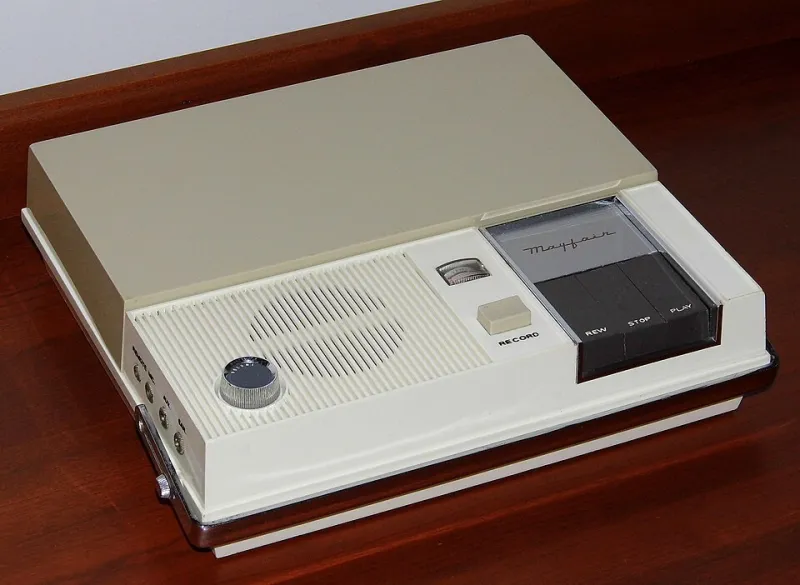
Photo: Joe Haupt from USA, CC BY-SA 2.0, via Wikimedia Commons
History, as it tends to be recorded, gravitates toward the legible. It favors the written document over the spoken word, the institutional record over the personal account, and the powerful over the precarious. Jersey City's official historical narrative has not been immune to these tendencies. For every account of a railroad magnate or a political boss, there exist dozens of unrecorded lives—the longshoreman who worked the same pier for thirty years, the seamstress who spent her days in a Bergen Avenue loft, the night-shift maintenance worker who kept the factories running while the managers slept.
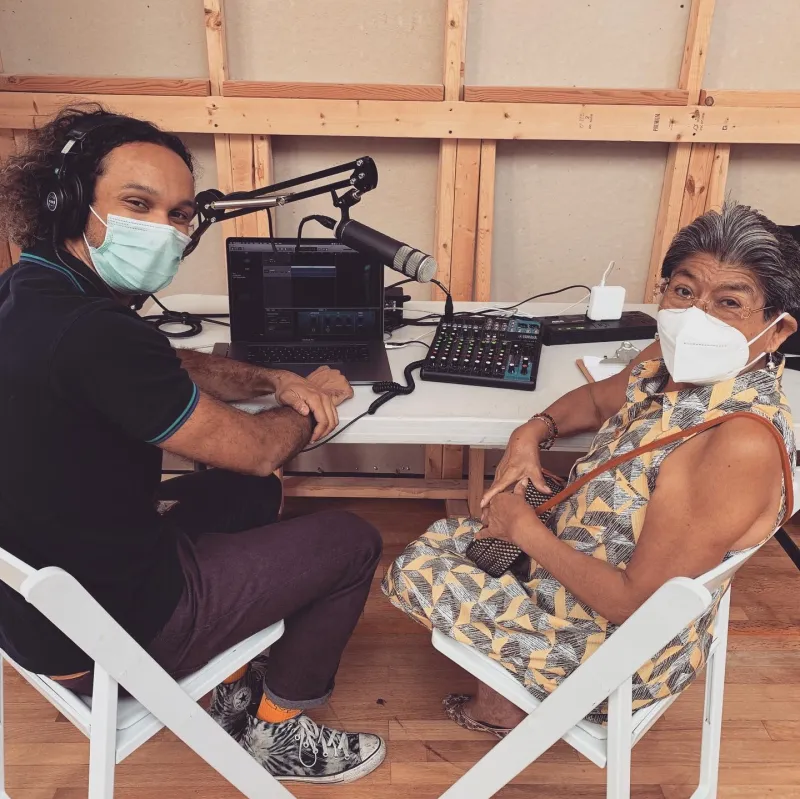
In recent decades, a quiet archival effort has been underway to locate, catalog, and preserve whatever remnants of these working-class voices have survived. What has been recovered is fragmentary but revelatory—a collection of oral history recordings, personal letters, union meeting transcripts, and interview notes that together constitute something the official record could never provide: testimony from the ground floor of American industrial life.
What the Archives Have Kept
The most significant repositories for Jersey City's working-class oral history are not always where one might expect to find them. The New Jersey Room of the Jersey City Free Public Library holds a modest but valuable collection of recorded interviews conducted during community documentation projects in the 1970s and 1980s—a period when the impending closure of several major industrial facilities prompted local historians and community organizers to begin capturing firsthand accounts before the relevant generation passed entirely from the scene.
Additional materials exist at Rutgers University's labor history collections, where records from the International Longshoremen's Association and several textile workers' locals contain meeting minutes, grievance filings, and occasional personal correspondence that illuminate the texture of working life in Jersey City's industrial peak. The Hudson County Clerk's Office, meanwhile, holds naturalization records and employment filings that, while not oral in character, provide documentary scaffolding against which recorded testimonies can be cross-referenced.
Perhaps the most poignant materials, however, are those that never entered any formal archive at all—recordings made by family members on consumer-grade equipment, letters preserved in shoeboxes, and diaries written in languages other than English that have awaited translation for decades. Community outreach efforts by local historical organizations have surfaced a number of such items in recent years, and the picture they collectively compose is one of extraordinary human complexity.
Labor, Ethnicity, and the Daily Arithmetic of Survival
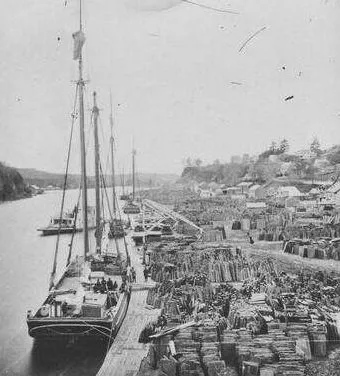
What strikes any researcher who engages seriously with these materials is the degree to which working life in mid-twentieth-century Jersey City was organized around ethnic geography. The waterfront was not simply a place of employment; it was a social ecosystem stratified by national origin, union politics, and neighborhood affiliation. Italian-American longshoremen dominated certain pier assignments while Polish and Slovak workers concentrated in others. African-American workers, systematically excluded from many union locals well into the postwar era, occupied a separate and considerably more precarious tier of the labor market.
The oral accounts reflect these divisions with a frankness that formal records rarely permit. In one recording held at Rutgers, a retired dock worker from the Greenville section recalls with matter-of-fact clarity the informal hierarchies that governed pier assignments: who received the steady work, who was sent home without pay on slow days, and how those decisions mapped almost perfectly onto ethnic and racial lines. His account neither sentimentalizes nor condemns; it simply describes, with the precision of someone who spent a lifetime navigating a system he understood completely even as it constrained him.
Similar patterns emerge from recordings made with former employees of Jersey City's manufacturing sector. Women who worked in the garment and textile industries of the 1940s and 1950s describe workplaces where ethnic solidarity and ethnic friction coexisted in close quarters—where shared immigrant experience created bonds across national lines even as competition for limited advancement opportunities generated tensions that formal labor histories rarely acknowledge.
The Language Question
One of the most significant and underappreciated challenges in recovering Jersey City's working-class oral history is linguistic. A substantial portion of the city's industrial workforce in the mid-twentieth century was either foreign-born or first-generation American, and many conducted their most intimate reflections—in diaries, in letters, in recordings made for family members abroad—in languages other than English.
Polish, Italian, Spanish, Ukrainian, and Yiddish materials have all surfaced in the course of recent archival outreach. The translation and contextual interpretation of these documents requires not only linguistic competence but cultural fluency—an understanding of the specific regional dialects, idiomatic expressions, and cultural references that give them their particular meaning. Finding scholars and community members equipped to provide that fluency has proven one of the more persistent logistical challenges facing local preservation efforts.
The stakes are not merely academic. These materials contain accounts of labor organizing activity, workplace accidents, housing discrimination, and encounters with municipal authorities that do not appear in any English-language source. They represent an entirely separate evidentiary stream—one that, if lost to deterioration or inaccessibility, will leave permanent gaps in the historical record.
What These Voices Argue
Taken together, the recovered testimonies of Jersey City's working class make an argument that no institutional history has made with comparable force: that the city's prosperity, its infrastructure, its neighborhoods, and its cultural character were built not by capital alone but by the accumulated daily labor of hundreds of thousands of individuals whose names appear nowhere in the commemorative record.
The longshoreman who spent thirty years on the Hudson piers, the factory worker who outlasted three rounds of layoffs, the domestic employee who raised other families' children while managing her own—these figures were not peripheral to Jersey City's history. They were its substrate. The commemorative plaques, the named streets, and the institutional histories that celebrate the city's industrial past have consistently obscured this fact by focusing attention on ownership and management while rendering labor anonymous.
Recovering these voices does not simply add texture to existing narratives. It reframes the narrative itself, redistributing historical credit in ways that more accurately reflect how cities are actually built and sustained.
The Urgency of the Present Moment
The window for this work is narrowing. The generation that worked Jersey City's waterfront and factories during the city's industrial zenith has largely passed. Their children, now themselves aging, carry secondhand memories that grow less precise with each passing year. The recordings and documents that have survived do so in formats—magnetic tape, deteriorating paper, early digital media—that require active conservation intervention to remain accessible.
Local historical organizations, archival professionals, and community members share a collective responsibility to treat this preservation work with the urgency it deserves. The stories these materials contain are not replaceable. When they are gone, they are gone entirely—and with them, an essential dimension of the true history of Jersey City.