Solvent and Then Silenced: The Deliberate Unmaking of Jersey City's Black Banking Infrastructure
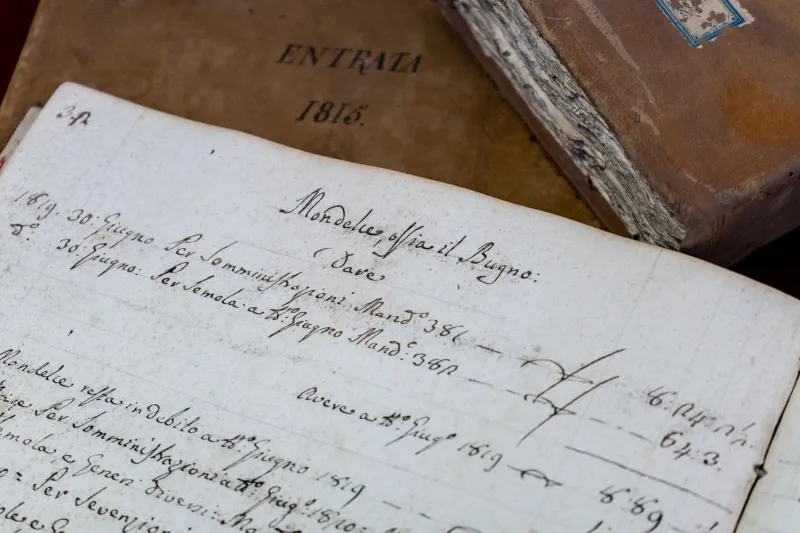
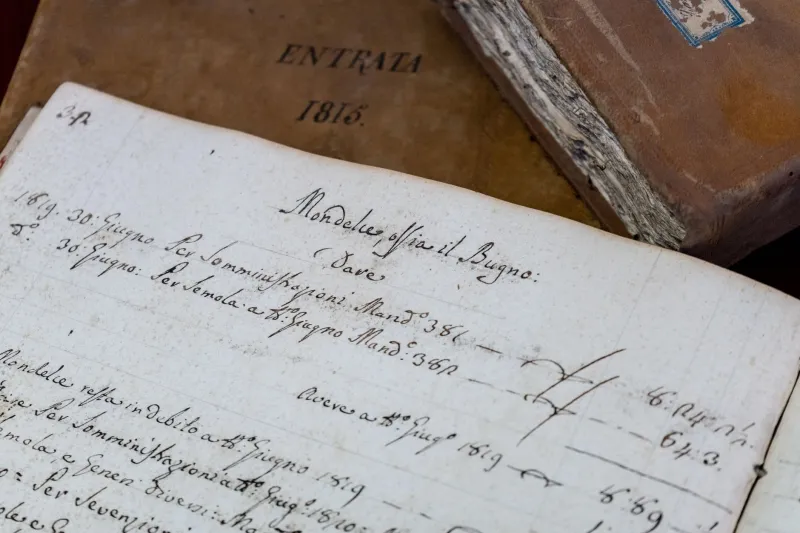
The ledger books, where they survive at all, are fragmentary. A deposit register here. A loan application there. Occasionally, a correspondence file that escaped the routine purges of mid-century bureaucratic housekeeping. What these scattered documents collectively describe, when read alongside contemporary newspaper accounts and the testimony of community members recorded decades later, is the outline of a financial world that once existed in Jersey City's African American neighborhoods — and the deliberate mechanisms by which it was erased.
Jersey City's Black-owned financial institutions never attracted the attention that comparable enterprises in Harlem or Durham, North Carolina commanded. They operated without fanfare, served constituencies that mainstream journalism rarely acknowledged, and left behind institutional records that subsequent generations had little means or incentive to preserve. Yet their existence was neither marginal nor accidental. They were the products of sustained community ambition, and their destruction was among the more consequential economic events in the city's modern history.
The Architecture of Black Financial Self-Determination
By the second decade of the twentieth century, Jersey City's African American population — concentrated primarily in the neighborhoods clustered around Montgomery Street and the older blocks of the Bergen-Lafayette district — had developed a recognizable commercial infrastructure. Churches anchored community life. Fraternal organizations administered informal credit networks. And, in several documented instances, community members pooled resources to establish savings associations and cooperative lending institutions that operated outside the exclusionary framework of the city's mainstream banks.
These institutions went by various names and operated under different legal structures. Some registered as building and loan associations, a common vehicle for community-based savings activity during this period. Others functioned as informal credit cooperatives, their transactions recorded in handwritten ledgers maintained by elected officers rather than professional accountants. A smaller number attempted to secure state charters as fully constituted banks — an ambition that, in nearly every documented case, met with prolonged regulatory resistance.
What united these varied enterprises was a common purpose: to provide African American residents with access to capital on terms that did not require them to absorb the humiliations and prohibitive costs routinely imposed by white-owned lending institutions. The surviving loan records, modest as they are, document mortgages extended to Black homeowners who had been turned away by every chartered bank in the city. They document small business loans that allowed entrepreneurs to open service establishments, retail shops, and tradesmen's enterprises in neighborhoods that larger institutions had effectively redlined out of their lending portfolios.
Regulatory Strangulation and Its Mechanisms
The dismantling of these institutions did not occur through any single dramatic event. It proceeded incrementally, through the accumulation of administrative burdens, selective enforcement of banking regulations, and the withdrawal of the interbank cooperation on which any financial institution ultimately depends.
New Jersey's banking regulatory apparatus, during the interwar decades, possessed broad discretionary authority over the chartering and supervision of financial institutions. The exercise of that discretion followed patterns that, while rarely documented in explicitly racial terms, produced outcomes that were unmistakably discriminatory. Applications for charters submitted by African American organizers encountered demands for documentation and capitalization levels that exceeded those routinely required of comparable white-owned institutions. Examinations of existing Black-operated associations were conducted with a frequency and rigor that contrasted sharply with the treatment of their white counterparts.
The effect of these practices was to impose a structural disadvantage on Black financial institutions that had nothing to do with their actual solvency or managerial competence. Institutions that were, by the evidence of their own records, meeting their obligations to depositors and borrowers were placed under supervisory pressure that consumed administrative resources, damaged community confidence, and ultimately forced closures that the underlying financial condition of the institutions did not warrant.
Federal housing policy compounded these local pressures in ways that proved decisive. The Home Owners' Loan Corporation's appraisal maps, introduced in the mid-1930s, systematically assigned the lowest risk ratings to neighborhoods with significant African American populations. The practical consequence was to render the collateral held by Black borrowers — and by the community institutions that had extended credit against that collateral — officially worthless in the eyes of the federally backed lending system. Black-owned financial associations found themselves holding mortgage portfolios that the dominant financial infrastructure refused to recognize, a circumstance that made refinancing, correspondent banking relationships, and eventual absorption into larger institutions effectively impossible.
Names the Archive Nearly Forgot
Among the institutions whose histories can be partially reconstructed from surviving sources, several deserve particular attention. The Colored Citizens' Building and Loan Association, active in Jersey City during the 1920s and into the early Depression years, appears in city directory listings and in the minutes of several fraternal organizations whose members also served as its officers. Its loan activity, documented in a partial ledger recovered from a private family collection, shows a consistent pattern of extending mortgage credit to Black homeowners in blocks that white-owned institutions had formally excluded from their lending territories.
A second institution, operating under the name of a fraternal order whose banking activities were conducted through a subsidiary savings committee, maintained records suggesting it served several hundred depositor households at its peak. The organization's dissolution, recorded in a brief notice published in a Black community newspaper in 1938, attributed the closure to "adverse conditions" — language that, in context, almost certainly referred to the combined pressures of Depression-era economic contraction and the regulatory environment described above.
The names of the men and women who organized and administered these institutions appear only occasionally in the surviving record. Officers' names surface in directory listings, in church bulletins, in the fraternal minutes that occasionally survived where financial records did not. Recovering those names — and insisting on their significance — is among the more urgent tasks facing researchers engaged with this period of the city's history.
The Inequality That Outlasted the Institutions
The destruction of Jersey City's Black-owned financial infrastructure did not merely end a chapter of community economic history. It foreclosed possibilities. The households that might have accumulated equity through access to community-controlled mortgage credit did not do so. The small businesses that might have expanded through access to non-discriminatory lending did not expand. The intergenerational wealth transfers that home equity makes possible did not occur across the generations that followed.
The wealth gap between Black and white Jersey City residents that researchers document today did not emerge from nowhere. It was produced, in significant measure, by the systematic dismantling of the economic infrastructure that African American communities had built with their own resources, under conditions of considerable adversity, during the first half of the twentieth century.
The ledger books that survive are incomplete. Many were never preserved at all. But the history they record — of institutions that were solvent, purposeful, and deliberately destroyed — is among the most consequential stories that Jersey City's historical archive has yet to fully tell.