Credit on Good Faith: The Neighborhood Grocers Who Held Jersey City Together During the Great Depression

Somewhere in a shoebox tucked into the back of a closet in the Greenville section of Jersey City, there may still exist a small cloth-bound ledger. Its pages, if they have survived the decades, would record names like Kowalski, Ferrante, Dominguez, and Petrov — families who owed anywhere from thirty cents to several dollars to a grocer who asked for nothing more than a promise to settle the account when circumstances allowed. These ledgers, modest and unassuming as they were, constituted one of the most consequential financial instruments in the city's history.
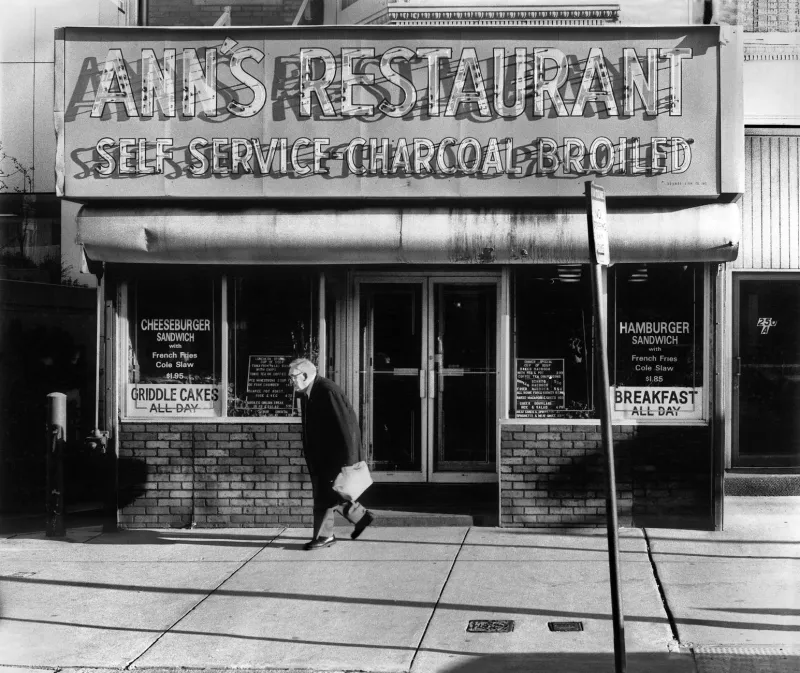
During the Great Depression, Jersey City's network of neighborhood grocery stores — numbering in the hundreds across wards as distinct as the West Side, Bergen-Lafayette, and the old Fifth Ward — operated a system of informal credit that no bank, no relief agency, and no government program could replicate. The men and women behind those counters knew their customers not as account numbers but as neighbors, parishioners, and fellow immigrants. That intimacy was the entire basis of the system.
The Architecture of Informal Credit
The mechanics of Depression-era grocery credit were straightforward in structure but deeply personal in execution. A customer would present herself at the counter — often the wife or eldest child of a household — and request items she could not immediately pay for. The grocer would record the transaction in a ledger, sometimes a commercial account book purchased from a stationer on Newark Avenue, sometimes nothing more than a ruled composition notebook. The entry would note the date, the items, the amount, and occasionally a brief notation — "husband laid off," "waiting on relief check," "will pay Friday" — that contextualized the debt.
These annotations are among the most historically revealing elements of the surviving records. They demonstrate that grocers were not merely passive creditors extending mechanical loans. They were active participants in the economic lives of their customers, making constant judgments about creditworthiness based not on formal financial criteria but on character assessments accumulated over years of daily interaction.
Researchers examining records held by the Hudson County Historical Society and fragments donated to the Jersey City Free Public Library's New Jersey Room have identified consistent patterns across these ledgers. Accounts were rarely called in aggressively. Interest was essentially never charged. And in numerous documented cases, debts were quietly written off entirely — recorded with a single line drawn through the entry, or the notation "forgiven" in the grocer's hand.
Names Behind the Counters
The grocers themselves deserve to be recovered from the historical margin to which time has consigned them. Among those whose records and reputations have been partially reconstructed through oral histories and surviving documents are figures like Salvatore Mancini, who operated a store on Communipaw Avenue through the worst years of the Depression and whose surviving account books suggest he was carrying outstanding credit for more than sixty families simultaneously by 1933. His grandson, interviewed for a neighborhood history project in the 1990s, recalled that Mancini kept a separate, private ledger that he never showed customers — one in which he tracked which debts he had quietly decided he would never collect.
Similarly, the Kaczmarek family, who ran a grocery on Monticello Avenue serving the Polish community of the West Side, maintained records that reveal the intersection of ethnic solidarity and commercial pragmatism. Their ledger entries shift language mid-page — Polish annotations alongside English product names — suggesting a bilingual business environment that mirrored the neighborhood itself. The Kaczmareks extended credit almost exclusively within the Polish immigrant community, a pattern that was common across Jersey City's ethnically organized neighborhoods and that reinforced the grocery store's role as a cultural institution as much as a commercial one.
In the African American communities of the Communipaw and Lafayette neighborhoods, the dynamics were both similar and distinct. Black-owned grocers faced the compounding pressures of racial discrimination in wholesale supply chains while simultaneously serving customers who were often last hired and first fired during the economic collapse. Figures like James Ellington — no relation to the bandleader — who operated a store near the Pennsylvania Railroad yards, appear in community organization records as having been instrumental in coordinating informal food-sharing networks that extended beyond his own store's capacity.
When the Ledger Replaced the Bank
To understand why the grocery credit system mattered so profoundly, one must appreciate the degree to which formal financial institutions had failed Jersey City's working-class communities by 1931 and 1932. Several local banks had suspended operations or restricted withdrawals. Federal deposit insurance did not yet exist. For immigrant families who had spent years building modest savings accounts, the bank failures of the early Depression represented a catastrophic and total loss.
The grocery credit system filled this void not through capital but through relationship. A grocer who extended credit to a laid-off steelworker's family was, in effect, absorbing that family's financial risk into his own business. He could do this precisely because he possessed information that no bank officer held: he knew whether the man drank, whether the wife was reliable, whether the older children were working odd jobs, whether the family had relatives who might help. This intimate knowledge — the kind that accumulates only through years of daily commercial interaction — was the collateral against which the credit was extended.
This was, in the language of contemporary economics, a form of social capital functioning as financial capital. But the grocers themselves would not have described it in such terms. Most accounts suggest they understood what they were doing simply as what neighbors did for neighbors.
The Fragility of the Archive
The historical record of this system is, by its nature, fragmentary. These were private business documents, never intended for public deposit or institutional preservation. Most were discarded when stores closed or when the families of deceased grocers cleared out business premises. The ledgers that survive do so largely by accident — tucked into estate boxes, folded into the back pages of family Bibles, or preserved by descendants who recognized their significance without necessarily knowing how to convey it to archivists.
The Jersey City Free Public Library's local history collections contain a small but meaningful cluster of such materials, and the Afro-American Historical Society of New Jersey has worked to document the parallel credit networks that sustained Black communities in Hudson County during the same period. Researchers and community members who possess such records are encouraged to consider donation or digitization arrangements that would bring these materials into a more stable archival context.
What the Ledgers Tell Us
Beyond their immediate historical content, these documents raise broader questions about the nature of economic resilience in urban immigrant communities. The grocery credit system was not a policy. It was not a program. It was not organized or coordinated in any formal sense. It emerged from the accumulated social infrastructure of neighborhood life — from the fact that people knew one another, depended on one another, and recognized that their individual fates were bound together.
Jersey City's Depression-era grocers were not heroes in any dramatic sense. They were small businesspeople trying to stay solvent in impossible conditions, making pragmatic decisions that happened to carry profound humanitarian consequences. The ledgers they kept were not monuments. They were working documents, stained with coffee and pencil erasures, filled with the unremarkable arithmetic of daily survival.
But in their very ordinariness, those ledgers preserved something that no official archive fully captured: the texture of a community economy held together not by institutions but by trust, and not by policy but by the intimate, unglamorous labor of people who simply knew their neighbors' names.