Counting in the Margins: The Hidden Commercial World of Jersey City's Chinese Merchant Class
A Commerce That Official Records Could Not See
In the archives of Hudson County, the ledgers tell an incomplete story. Census enumerators recorded names phonetically, often incorrectly. Municipal business licenses issued to Chinese-owned establishments frequently listed Anglo intermediaries as proprietors, obscuring the true ownership beneath layers of legal necessity. Tax rolls, city directories, and commercial surveys from the late nineteenth and early twentieth centuries present a Jersey City in which Chinese entrepreneurial life was, to all appearances, marginal — a footnote pressed into the corner of a larger urban narrative.
That impression is profoundly misleading.
Research conducted over the past two decades, drawing on private family papers, surviving account books written in classical Chinese commercial script, and oral histories collected from descendants of early immigrant merchants, reveals a commercial world of considerable sophistication. Jersey City's Chinese residents did not simply endure within a hostile economic environment. They constructed an alternative economic architecture — one calibrated precisely to function beneath the threshold of official visibility.
The Geography of an Invisible Market
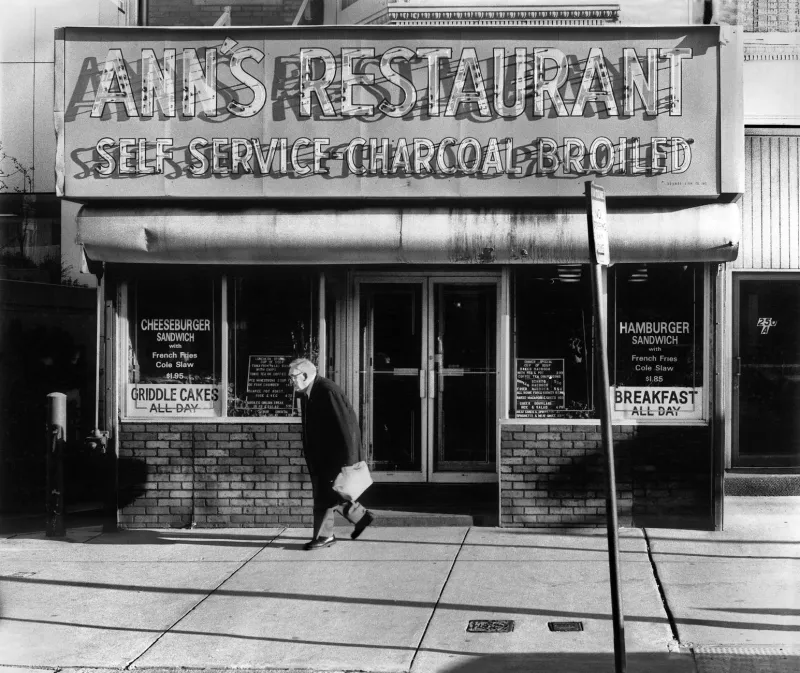
Jersey City's Chinese commercial presence in the late 1800s was not confined to the small cluster of laundries and restaurants that appear in period photographs. Those establishments served, in part, as the publicly legible face of a far more complex set of arrangements. Behind storefronts on Newark Avenue and in the densely settled blocks south of Journal Square, merchant networks operated through overlapping systems of credit, goods exchange, and labor brokerage that connected Jersey City to New York's Chinatown, to Philadelphia, and, through transpacific correspondence, to commercial houses in Guangdong Province.
The silk trade provides one of the clearest documented examples. Surviving correspondence from the estate of one Jersey City merchant family — whose descendants donated the papers to a local historical society in the 1990s — reveals a trading operation that sourced raw and finished silk goods through a network of agents operating across five American cities. Goods moved through informal freight arrangements, often piggybacking on the railroad infrastructure that defined Jersey City's broader commercial geography. The city's position as a rail terminus and ferry hub, so central to its identity as an industrial entrepôt, was equally central to the logistics of this parallel commerce.
Credit Without Collateral: The Mechanics of Community Finance
Perhaps the most remarkable feature of Jersey City's Chinese commercial networks was their internal credit system. Formal lending institutions of the era routinely denied credit to Chinese applicants, a practice reinforced by both explicit policy and informal discrimination. In response, merchant communities organized rotating credit associations — known variously by their Cantonese name, hui, or by anglicized approximations — that pooled capital among trusted participants.
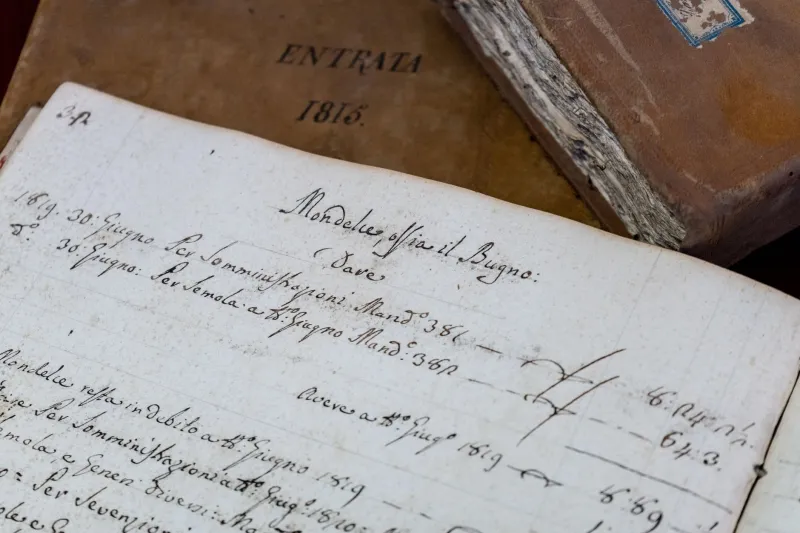
These associations left behind remarkably detailed records in some cases. A ledger recovered from a storage unit in the Bergen-Lafayette neighborhood in 2007, its provenance traced to a family that had operated a dry goods business near the waterfront, contains entries spanning nearly three decades. The accounts document loans extended among community members, repayment schedules, interest calculations, and notations regarding the creditworthiness of individual participants. The handwriting shifts across entries, suggesting multiple record-keepers over the years — a detail that itself speaks to the institutional continuity these associations maintained across generations.
The system was not without its tensions. Disputes over repayment, accusations of favoritism in the allocation of pooled funds, and the complications introduced by anti-Chinese immigration legislation — which disrupted family structures and created legal uncertainties around property ownership — all appear in the documentary record. Yet the associations endured, precisely because no external institution offered a comparable alternative.
Reading the Silences in the Census
Historians working with Jersey City's census records from the 1880 through 1930 period encounter a persistent problem: the data is there, but it systematically misrepresents what it claims to document. Chinese residents were frequently recorded under anglicized names bearing no phonetic resemblance to their actual names. Occupations were collapsed into a handful of categories — launderer, cook, merchant — that concealed the actual diversity of economic roles within the community.
Cross-referencing census entries against the internal records of merchant associations and family papers reveals the scale of this misrepresentation. Individuals recorded simply as launderers in official documents appear in community records as owners of multiple properties, creditors to other businesses, and participants in long-distance trade networks. The gap between what the census said and what the community actually was reflects not simply administrative carelessness, but the cumulative effect of exclusionary legislation — including the Chinese Exclusion Act of 1882 — that gave Chinese residents powerful incentives to minimize their economic visibility.
Material Culture as Documentary Evidence
Where written records are absent or incomplete, material culture has sometimes filled the gap. Archaeological investigations conducted in connection with development projects along Jersey City's waterfront have occasionally surfaced artifacts associated with Chinese commercial life: fragments of distinctive ceramic goods, remnants of packaging materials bearing Chinese-language markings, and, in one notable case documented by a local preservation group, a cache of abacus beads recovered beneath the floorboards of a building on a block once densely occupied by immigrant merchants.
These objects are not spectacular finds in the conventional archaeological sense. Their significance is documentary rather than aesthetic. Each artifact is a small piece of evidence that commercial activity occurred in a particular place at a particular time — activity that official records either ignored or deliberately obscured.
Oral History and the Limits of Living Memory
The oral history record is, at this point, urgent in a particular way. The descendants of Jersey City's earliest Chinese merchant families are now typically third and fourth generation Americans. The direct memory of how the commercial networks operated — the names of trusted associates, the specific mechanisms of credit allocation, the routes along which goods moved — is fading rapidly.
Interviews conducted with several families over the past fifteen years have captured fragments of this memory. One account, provided by an elderly woman whose grandfather operated a provisions business near the Hudson waterfront in the 1910s and 1920s, describes in detail the practice of maintaining two sets of accounts: one for presentation to tax authorities and licensing officials, and one recording the actual state of the business. She recalled her grandfather explaining this not as deception, but as a survival strategy imposed by a legal environment that refused to treat Chinese businesspeople as legitimate participants in the city's commercial life.
Recovering a Suppressed Economic History
The broader implication of this research is not simply that Jersey City's Chinese merchant class was more economically significant than official records suggest. It is that the mechanisms of that suppression — the discriminatory legislation, the administrative practices that misrecorded names and occupations, the exclusion from formal credit markets — were themselves historical forces that shaped the city's development.
The parallel commercial systems that Chinese merchants built in response to exclusion were not marginal phenomena. They were adaptive responses to structural hostility, and they sustained communities that in turn contributed to Jersey City's urban fabric in ways that mainstream historical accounts have consistently undervalued.
Recovering this history requires working against the grain of the archive — reading official silence as evidence, treating community documents with the same analytical seriousness as municipal records, and listening carefully to the memories that remain before they, too, are lost. The ledgers written in the margins of Jersey City's official story have much left to tell.