Voices Fading into Concrete: The Multilingual Soundscape That Once Defined Jersey City's Streets
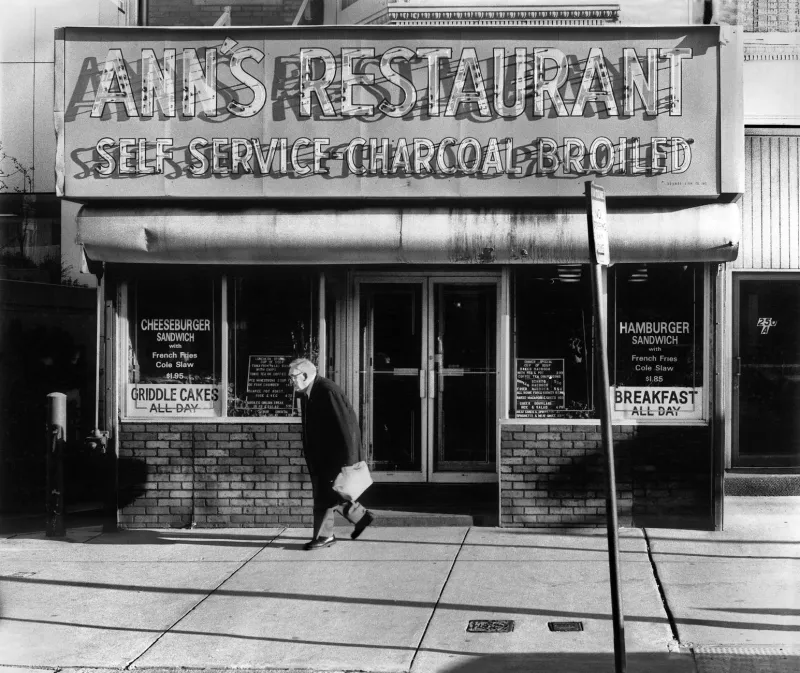
For much of the nineteenth and twentieth centuries, Jersey City's streets resonated with a remarkable chorus of languages, dialects, and accents that mapped the city's successive waves of immigration as precisely as any census record. From the German-speaking enclaves of the Heights to the Polish parishes of Greenville and the Spanish-language storefronts of Journal Square, the city's linguistic texture was itself a living archive. That soundscape is now largely silent, its remnants preserved only in oral history recordings, archived radio broadcasts, and a handful of academic studies that document what assimilation has gradually erased.
Understanding what has been lost requires understanding what once existed — and why language, in an immigrant city, was never merely a matter of communication. It was the medium through which community was constituted, identity was maintained, and belonging was negotiated across generations.
The German Foundation
Among the earliest immigrant communities to leave a durable linguistic imprint on Jersey City were the German-speaking arrivals of the mid-nineteenth century. By the 1860s, neighborhoods along the northern reaches of the city had developed a sufficiently dense German-speaking population to support their own newspapers, churches, and fraternal organizations, all conducted in the language of the old country. The Jersey City Freie Zeitung, published entirely in German, served as both a practical resource and a cultural anchor for families navigating life in an English-speaking metropolis.
The German spoken in these neighborhoods was not a monolith. Linguists who have examined period correspondence and community records note the presence of distinct regional dialects — Bavarian inflections here, Rhenish speech patterns there — reflecting the diverse geographic origins of the emigrant population. These distinctions mattered enormously to the communities themselves, functioning as markers of sub-group identity within a broader immigrant category that outsiders often treated as uniform.
The pressures of two world wars accelerated what assimilation had already begun. By the 1920s, public use of German in Jersey City had become socially fraught, and the deliberate suppression of the language in schools and civic life hastened its disappearance from the streets within a single generation.
Italian Voices and the Architecture of Dialect
The Italian immigration that reshaped Jersey City between roughly 1880 and 1930 introduced a linguistic complexity that confounded the simple category of "Italian." The immigrants who settled in what would become the Marion section, in the blocks surrounding St. Anthony of Padua Church, and in scattered pockets throughout the downtown wards were not speakers of a unified national language. They arrived speaking Neapolitan, Sicilian, Calabrian, and a dozen other regional tongues that were, in many cases, mutually incomprehensible.
The neighborhood itself became a crucible in which these dialects gradually blended, producing what sociolinguists sometimes describe as a koiné — a contact variety that smoothed regional differences while preserving distinctly Italian phonological features. Recordings made by community organizations in the 1970s and 1980s, several of which are held in the collections of the New Jersey State Archives, capture elderly residents whose speech retains traces of this process: English words rendered with unmistakably Neapolitan vowel qualities, Italian grammatical structures persisting beneath English syntax.
For the generations that came of age after World War II, however, Italian-inflected English was increasingly a liability rather than an asset. The children of immigrants, eager for professional mobility in a society that equated standard American speech with competence and respectability, consciously abandoned the linguistic inheritance of their parents.
Polish, Slovak, and the Parish as Linguistic Institution
In Greenville and portions of the Bergen-Lafayette neighborhood, the Catholic parish served a function that extended well beyond religious observance. For Polish, Slovak, and Lithuanian immigrants, the parish was the primary institutional space in which the mother tongue was maintained across generations. Masses conducted in the native language, parochial schools where children received instruction in both English and the ancestral tongue, and parish social halls where community events were conducted in something other than English — these structures delayed, though ultimately could not prevent, the erosion of linguistic heritage.
The Polish spoken in Jersey City's immigrant parishes bore the marks of its American context from an early stage. Linguists have documented the emergence of what is sometimes called "Polonia Polish" — a variety incorporating English loanwords, particularly for objects and concepts that had no ready equivalent in the vocabulary of rural Poland, while preserving the grammatical architecture of the ancestral language. This hybrid form was not a corruption, as nativist critics often characterized it, but a creative adaptation that served the genuine communicative needs of a community living across two cultural worlds.
By the 1960s and 1970s, as the children and grandchildren of these immigrants moved to the suburbs of Hudson County and beyond, the parish-centered linguistic infrastructure that had sustained these varieties for decades began to dissolve.
Spanish and the Living Archive
Unlike the languages of earlier immigrant waves, Spanish in Jersey City has not followed a straightforward trajectory toward disappearance. The Puerto Rican, Cuban, Dominican, and Central and South American communities that established themselves in the city during the latter half of the twentieth century — and that continue to arrive today — have maintained Spanish as a living community language across multiple generations, sustained by ongoing migration, transnational family networks, and the sheer demographic weight of a population that now constitutes a substantial portion of the city's residents.
The Spanish spoken in Jersey City is itself a linguistically diverse phenomenon. Puerto Rican Spanish, with its distinctive Caribbean phonology, coexists with the varieties brought by Mexican, Ecuadorian, and Dominican immigrants, producing a neighborhood soundscape of considerable internal variation. Journal Square and the Greenville corridor function today as spaces where this multilingual vitality remains audible in ways that earlier immigrant districts no longer can.
Yet even here, researchers note the familiar pressures of assimilation at work. Third-generation speakers often exhibit what linguists term "heritage language" patterns — reduced fluency, simplified grammatical structures, and heavy influence from English — suggesting that Spanish, too, may follow the generational arc that claimed German, Italian, and Polish before it.
What the Recordings Preserve
The most direct evidence of Jersey City's lost linguistic landscape survives in oral history collections assembled by institutions including the Jersey City Free Public Library, Rutgers University–Newark, and various community organizations that recognized, often at the last possible moment, the urgency of documentation. These recordings — conducted in living rooms, parish halls, and the back rooms of businesses that had operated for decades — capture voices that no longer exist and speech patterns that have not been heard on the city's streets for a generation or more.
Archived radio broadcasts from stations that served immigrant communities in the mid-twentieth century offer a complementary record. Programs produced for Italian, Polish, and Spanish-speaking audiences not only document the languages themselves but reveal the cultural preoccupations, the political anxieties, and the community bonds that those languages carried.
Taken together, these materials constitute a sonic archive of Jersey City's social history — one that complements the documentary evidence preserved in city records, newspaper files, and church registers. They remind us that the history of a city is not only written in its buildings and its streets but spoken in the voices of those who inhabited it.
Preserving and making accessible what remains of that archive is among the more pressing tasks facing those who care about Jersey City's heritage. Languages, unlike buildings, leave no ruins when they disappear. The silence they leave behind is total — unless, before they go, someone has thought to press record.