Numbers in the Shadows: The Jewish Accountants Who Made Jersey City's Informal Economy Legible
In the early decades of the twentieth century, Jersey City's immigrant neighborhoods operated according to economic rules that no bank charter formalized and no municipal ledger recorded. Credit passed between neighbors on the strength of a handshake. Rent arrangements were renegotiated in kitchen Yiddish. Loans moved through rotating savings circles without a single signature from a licensed institution. Yet despite the apparent informality of these transactions, they were not unrecorded. Somewhere in a cramped office above a Communipaw Avenue dry-goods store, or tucked behind a curtain in a Montgomery Street tenement, a bookkeeper sat with a ruled ledger and made sense of it all.
These were the ledger keepers — immigrant Jewish accountants and bookkeepers who served as the financial nervous system of communities that mainstream institutions largely refused to serve. Their work has received almost no sustained historical attention, yet the economic networks they maintained were essential to the survival and eventual prosperity of thousands of Jersey City families.
The Professional Class That Official History Forgot
By the 1910s and 1920s, Jersey City's Jewish population had established dense residential clusters in the downtown wards and along the western corridors toward Bergen Hill. Within these communities, a distinct professional stratum emerged: men — and, less visibly, women — who had arrived from Eastern Europe with training in commercial arithmetic, Talmudic precision, or simply the hard-won literacy that made them indispensable to neighbors who could not navigate English-language financial paperwork.
They were not licensed CPAs in any formal sense, though some eventually pursued certification. Their authority derived instead from community trust and demonstrable competence. A tenement landlord managing twelve units and collecting rents in cash needed someone who could track arrears, calculate interest on informal loans, and produce a comprehensible accounting at the end of each month. A small manufacturer operating in one of Jersey City's light-industrial corridors needed records that could satisfy a wholesale supplier without exposing the full precariousness of the underlying operation. These bookkeepers provided exactly that service — for modest fees paid in cash, in goods, or occasionally in future favors.
Parallel Ledgers for a Parallel Economy
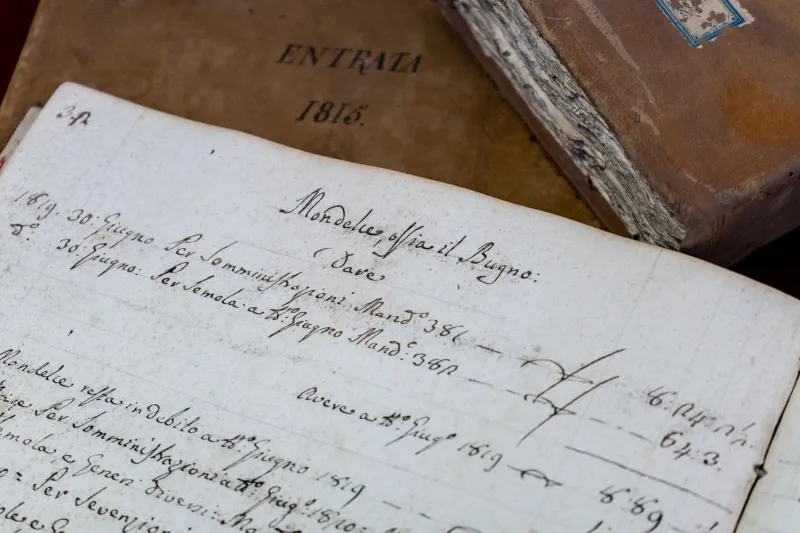
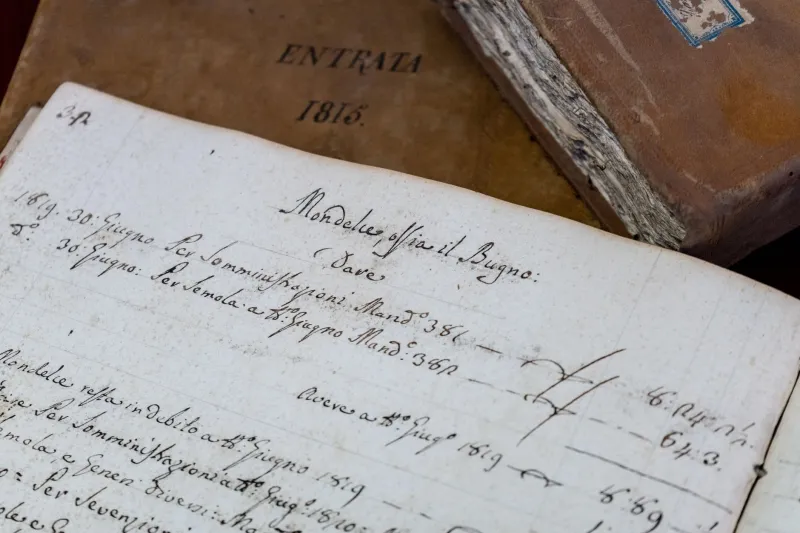
What distinguished the work of these financial intermediaries was not merely its informality but its deliberate duality. Many maintained two sets of records — not in the fraudulent sense that phrase typically implies, but in a functionally pragmatic one. One ledger reflected what a business nominally reported; a second captured the actual flows of credit, debt, and obligation that kept the enterprise solvent. This second ledger was the true map of the economy.
Within those pages, historians who have managed to locate surviving examples find extraordinary detail. Loan amounts recorded to the penny. Interest rates — often far below what commercial lenders charged, and sometimes zero among close community members — noted alongside repayment schedules that accommodated seasonal income fluctuations. Notations in Yiddish, Hebrew, Russian, and English, sometimes all four within a single entry, reflecting the polyglot realities of immigrant commercial life.
The records also captured transactions that crossed ethnic lines. A Jewish bookkeeper might maintain accounts for a Polish butcher, an Italian produce vendor, or an African American rooming-house operator who had been turned away from every formal credit institution in Hudson County. In this respect, the ledger keepers served a function that transcended their own community's boundaries, providing financial infrastructure for the city's broader informal sector.
The Rotating Credit Networks They Sustained
Among the most significant contributions of these accountants was their role in formalizing — to whatever degree was necessary — the rotating credit associations that immigrant communities relied upon in the absence of accessible banking. Known variously as a gemilut hasadim fund in Jewish tradition, or by cognate names in other immigrant cultures, these circles pooled small contributions from members and distributed lump sums in rotation, allowing participants to make purchases or investments that their individual savings could not support.
Without reliable record-keeping, such systems were vulnerable to misunderstanding, accusation, and collapse. A trusted bookkeeper who maintained transparent records, arbitrated disputes, and ensured that every participant's contribution and receipt were properly documented transformed a fragile social arrangement into a durable financial institution. Several of Jersey City's most successful mid-century Jewish businesses — in manufacturing, retail, and real estate — traced their origins to capital accumulated through exactly these circles, as documented in surviving family records and oral histories collected by local researchers in subsequent decades.
Women Behind the Ledger
The historical record, fragmentary as it is, suggests that women played a considerably larger role in this bookkeeping world than traditional accounts acknowledge. In households where the male head of family managed a storefront, it was frequently his wife or sister who maintained the actual accounts — tracking credit extended to regular customers, calculating what was owed to suppliers, and managing the informal lending that kept neighbors afloat between paydays.
These women rarely identified themselves as accountants or bookkeepers in census records, which typically listed their occupation as "housewife" regardless of the economic labor they performed. Their invisibility in official documentation is itself a historical argument: the informal economy they sustained was invisible precisely because the people who maintained it were systematically excluded from formal professional recognition.
What Survived, and What Did Not
The archival situation for this history is, to put it plainly, difficult. Most of the ledgers these bookkeepers maintained were never intended to survive. They were working documents, not archives. When a business closed, when a family moved, when a building was demolished — as so many of Jersey City's older structures were during the urban renewal campaigns of the 1950s and 1960s — the records went with them. Some were deliberately destroyed by families who feared that documentation of informal financial arrangements might attract unwanted scrutiny.
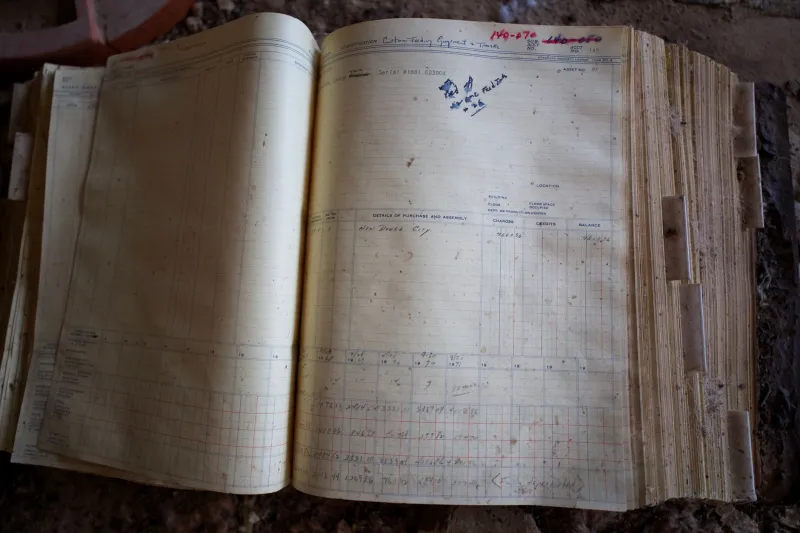
What remains is scattered and partial: a ledger recovered from a demolished Greenville property during renovation work in the 1980s; a cache of correspondence between a bookkeeper and his clients, preserved by a descendant who recognized its historical value; oral histories recorded by community organizations in the 1970s, in which elderly residents recalled with precision the names and methods of the accountants who had served their parents' generation.
From these fragments, a picture emerges — incomplete but coherent — of a professional world that was essential to the functioning of Jersey City's immigrant economy and almost entirely absent from the official record.
A History Worth Recovering
The ledger keepers of Jersey City's Jewish immigrant neighborhoods were not merely accountants. They were translators — between languages, between formal and informal economic systems, between the world as official institutions recognized it and the world as immigrant communities actually lived it. The precision they brought to their work made entire economic ecosystems legible and, by extension, sustainable across generations.
To recover this history is not simply to honor a forgotten professional class. It is to understand that Jersey City's economic development in the twentieth century rested on foundations that no official account has yet fully described. The numbers were always there, kept with care in ledgers that most people never saw. The work of history, now, is to find them.