Ghosts in the Mortar: The Vanished Buildings That Once Defined Jersey City's Streets
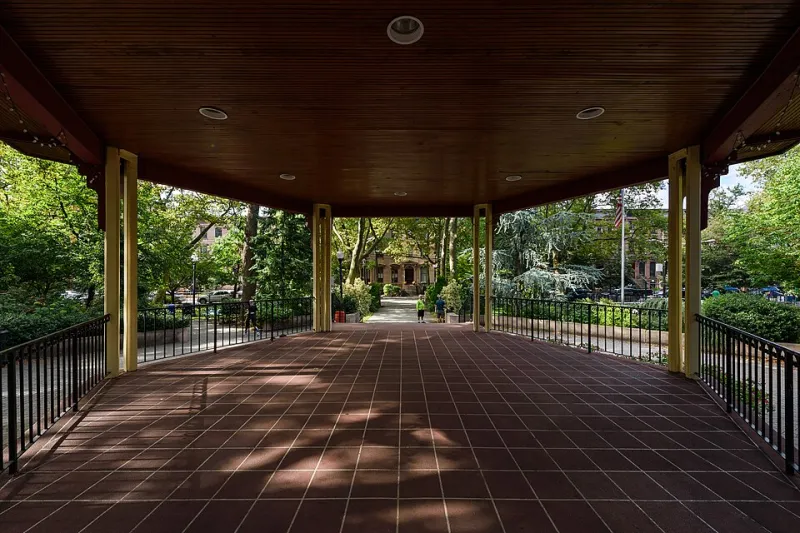
Photo: King of Hearts, CC BY-SA 4.0, via Wikimedia Commons
Scattered across Jersey City's neighborhoods, gaps in the urban fabric mark the sites of buildings that once housed generations of families, anchored commercial streets, and gave distinct visual character to communities now transformed beyond recognition. Through archival photographs, municipal records, and the recollections of longtime residents, this investigation examines what the city has lost — and why the structures that remain deserve our most urgent attention.
Reading the City as a Document
Every city is, in a sense, a text written and rewritten across time. The buildings that survive tell one version of a community's story; the empty lots, parking structures, and glass-faced condominiums that replaced demolished structures tell another. In Jersey City, that palimpsest is particularly legible to those willing to look carefully — and the story it tells is by turns fascinating and sobering.
For a city that once ranked among the most architecturally varied in New Jersey, Jersey City has lost a remarkable proportion of its built heritage over the past half century. Federal urban renewal programs of the 1960s and 1970s, the subsequent decades of disinvestment and speculative demolition, and more recently the pressures of a red-hot real estate market have all extracted their toll. What remains is a fragmented record of what was once a coherent architectural landscape.
The Urban Renewal Era: Progress and Its Price
The most concentrated period of architectural loss in Jersey City's modern history unfolded between approximately 1960 and 1980, when federally funded urban renewal initiatives reshaped entire neighborhoods in the name of slum clearance and modernization. The Lafayette neighborhood, portions of the Greenville district, and large sections of the area surrounding Journal Square all experienced wholesale demolition of nineteenth-century housing stock that, by the standards of the era, was deemed beyond rehabilitation.
The human and architectural dimensions of this loss were inseparable. The tenement buildings targeted for removal were, without question, frequently overcrowded and underserved by municipal infrastructure. Many lacked adequate plumbing and heating. But they were also the physical containers of community life — the settings in which Polish families on Monmouth Street gathered for Sunday dinners, where Italian bakeries on Grove Street operated from storefronts that had been in the same family for three generations, where Syrian and Lebanese merchants had established the commercial patterns of their enclave along a stretch of Pacific Avenue that no longer exists in any recognizable form.
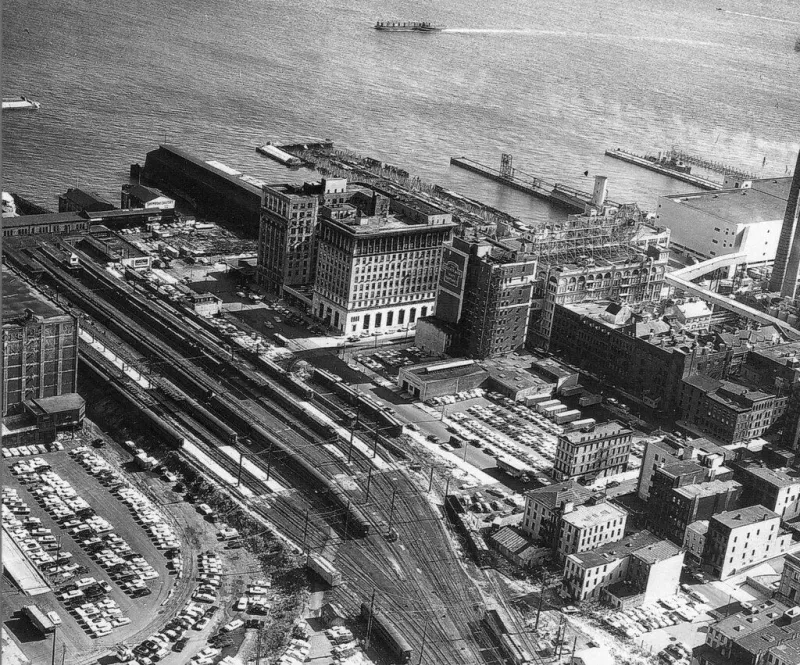
Archival photographs held in the New Jersey Room of the Jersey City Free Public Library offer a haunting record of what was removed. Row upon row of Italianate brownstones with elaborately corbeled cornices, Queen Anne-style mixed-use buildings whose upper floors housed families while their ground floors sustained neighborhood commerce, and the occasional Romanesque Revival institutional structure — churches, schools, social clubs — that gave each district its civic anchor. In image after image, these structures appear solid and inhabited, their stoops populated with residents who had no way of knowing that within a decade or two their homes would be reduced to rubble.
Specific Losses Worth Documenting
Among the most significant architectural casualties of the urban renewal period was the original Hudson County Courthouse annex, a Beaux-Arts structure that stood adjacent to the main courthouse building on Newark Avenue. Municipal records from the early 1970s document a perfunctory review process that concluded the building was structurally compromised, though subsequent architectural historians have questioned whether rehabilitation was genuinely explored before the demolition order was issued.
Equally significant was the loss of the Loew's Journal Square Theater's companion venue, a smaller neighborhood movie palace on Bergen Avenue that had served the local community since the 1920s. Unlike the Loew's Jersey — which survives today as a celebrated landmark and performance space — this secondary theater was demolished in 1974 to make way for a commercial development that itself was subsequently abandoned, leaving a vacant lot that persisted for over two decades.
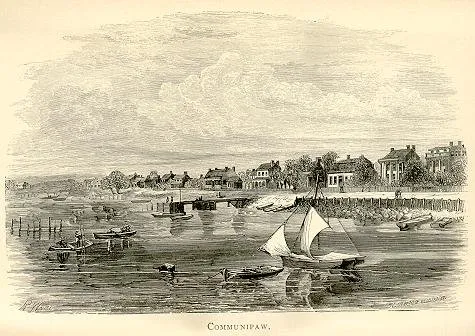
In the Greenville neighborhood, a cluster of late Victorian commercial buildings along Communipaw Avenue that had formed the commercial heart of the district's African American community was systematically cleared during the 1960s. These structures were not merely architecturally significant; they represented the physical infrastructure of a self-sustaining community economy — barbershops, insurance offices, churches, and social halls — whose destruction accelerated the dispersal of a cohesive neighborhood network that took generations to build.
Voices from the Neighborhoods
The archival record is enriched and complicated by the testimony of longtime residents who witnessed these transformations firsthand. Interviews conducted over the past several years with residents who came of age in Jersey City during the 1950s and 1960s consistently emphasize the speed with which familiar landscapes were altered and the inadequacy of community consultation that preceded demolition decisions.
"They told us the buildings were coming down and that was that," recalled one woman who grew up near the Lafayette neighborhood during the urban renewal years. "Nobody asked us what we thought should happen. The buildings where my grandmother lived, where I went to school — they were just gone. And what they put in their place was nothing like what was there before."
This sentiment — the experience of removal without replacement — recurs throughout oral history collections maintained by local preservation organizations. The physical structures that were demolished took with them the spatial logic of neighborhood life: the proximity of residence to commerce, the walkable scale of streets designed for pedestrians rather than automobiles, the visual density that made urban neighborhoods feel inhabited rather than merely occupied.
What Still Stands, and Why It Matters
Against this record of loss, the architectural survivors of Jersey City's nineteenth and early twentieth century building boom take on heightened significance. The Van Vorst Park Historic District, with its remarkably intact collection of Federal and Greek Revival rowhouses dating from the 1830s through the 1860s, represents one of the most significant concentrations of pre-Civil War residential architecture in New Jersey. The Hamilton Park neighborhood preserves a similarly coherent streetscape of Italianate and Second Empire townhouses that document the aspirations of the city's Victorian-era merchant class.
In the Bergen-Lafayette neighborhood, a number of late nineteenth-century commercial buildings retain their original cast-iron storefronts — a construction technology that was once ubiquitous in American cities but has become increasingly rare as older commercial districts have been demolished or insensitively altered. These structures are not merely aesthetically pleasing; they are primary documents of the economic and technological history of their era.
The preservation of these remaining structures is not a foregone conclusion. Development pressure in Jersey City has intensified dramatically over the past two decades, and the regulatory frameworks that protect historic buildings are only as effective as the political will to enforce them. Several properties currently listed on the New Jersey Register of Historic Places have faced demolition applications in recent years, and the outcomes of those processes have been mixed.
The Archive as Advocacy
Documenting what has been lost serves a purpose beyond mere historical record-keeping. When communities can see clearly what urban renewal and speculative demolition have cost them — not in abstract terms but in specific buildings, specific streets, specific places where lives were lived — the calculus of development decisions becomes more transparent. The photographs, deeds, building permits, and oral histories preserved in Jersey City's archival collections are, in this sense, instruments of civic accountability.
The buildings that remain are not simply old structures. They are the physical memory of a city that has been remade multiple times and will continue to change. Preserving them — or at minimum, thoroughly documenting them before they are lost — is an act of respect for the communities that built them and an investment in the city's capacity to understand its own story.