Iron Rails and Urban Identity: The Railroads That Forged Jersey City's Character
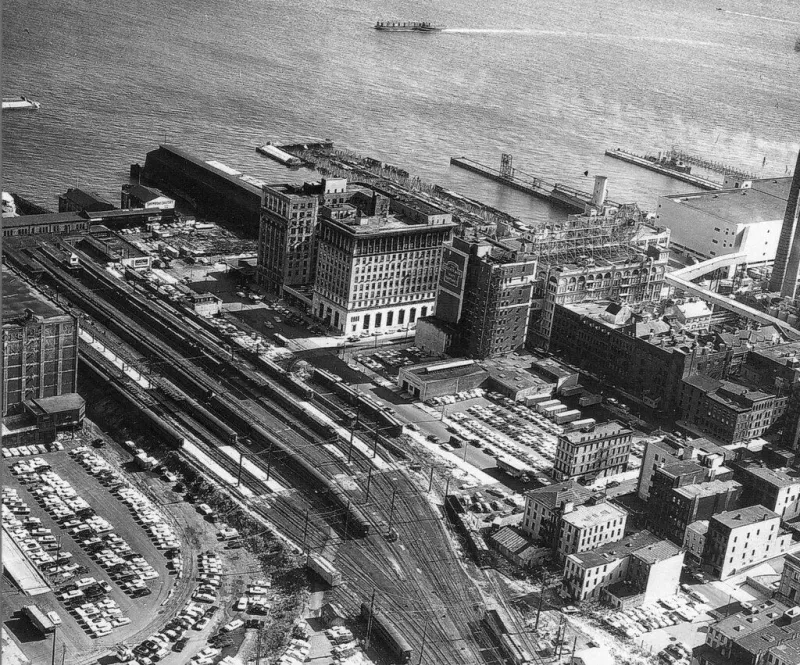
Photo: historic Pennsylvania Railroad terminal Jersey City Hudson River waterfront 1900s, via i.pinimg.com
There is a particular kind of historical irony embedded in the fact that Jersey City's most celebrated contemporary amenity—its rapid transit connection to Manhattan—is a direct descendant of the railroad infrastructure that nineteenth-century industrialists constructed for the movement of freight and passengers across the Hudson River. The PATH train, the commuter ferries, the network of tunnels and elevated structures that carry thousands of riders daily: all of these owe their existence, in one form or another, to decisions made by railroad executives and municipal officials in an era when Jersey City was arguably the most strategically important transportation node on the Eastern Seaboard.
Understanding how the railroads shaped Jersey City requires more than a recitation of corporate mergers and infrastructure projects. It demands an examination of how iron rails and freight terminals restructured the city's neighborhoods, organized its labor force, and gave its residents a distinctive sense of identity—one built on movement, industry, and proximity to the nation's commercial heartbeat.
The Geography of Rail Dominance
By the mid-nineteenth century, Jersey City had emerged as the eastern terminus of several major railroad lines that stretched across the continent. The Pennsylvania Railroad, one of the most powerful corporations in American history, established its primary eastern terminal at Exchange Place, where passengers and freight arriving from Philadelphia, Pittsburgh, and points west were transferred to ferries for the final crossing to Manhattan. The Erie Railroad, meanwhile, operated extensive facilities along the northern waterfront, while the Central Railroad of New Jersey maintained its own terminal—a structure whose elegant Beaux-Arts facade still stands today as a state historic site.
This concentration of rail infrastructure was not accidental. Jersey City's geography made it the natural gateway between the continental interior and the port of New York. The Hackensack and Passaic rivers to the north and west created a corridor that funneled rail traffic toward the Hudson River crossing, and the relatively flat terrain of the Hudson County waterfront accommodated the vast yards, roundhouses, and terminal facilities that the railroads required.
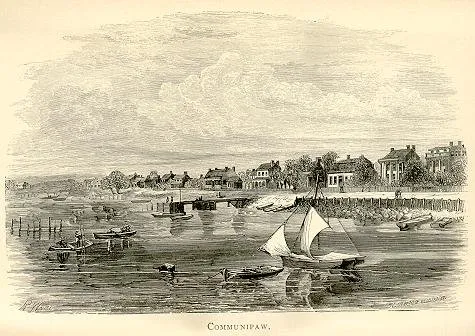
The result was a waterfront defined almost entirely by industrial function. Miles of track, acres of freight sheds, and the constant movement of locomotives and rail cars shaped the physical environment of neighborhoods from Communipaw in the south to the Harsimus Cove area in the north. Residents of these neighborhoods lived in close proximity to one of the most intense concentrations of industrial activity in the United States.
Labor, Community, and the Railroad Economy
The railroads did not simply alter Jersey City's landscape. They organized its economy and, by extension, its social structure. Tens of thousands of workers—engineers, firemen, brakemen, freight handlers, mechanics, and clerical staff—owed their livelihoods to the railroad corporations that dominated the waterfront. These workers and their families populated the row houses and tenements of neighborhoods like Lafayette, Greenville, and the Heights, creating communities whose rhythms were calibrated to the demands of the rail yards.
The labor history of Jersey City's railroad workers is a story of both solidarity and conflict. The great railroad strikes of the late nineteenth century—including the nationwide upheaval of 1877—had direct reverberations in Jersey City, where workers walked off the job and confronted both company guards and state militia. These events were formative for the city's labor movement, which would remain a significant force in local politics well into the twentieth century.
Railroad unions—the Brotherhood of Locomotive Engineers, the Brotherhood of Railroad Trainmen, and others—established a presence in Jersey City that extended beyond the workplace. Union halls served as community centers. Labor newspapers circulated through the neighborhoods. The culture of solidarity that the railroad unions cultivated contributed to a broader working-class civic identity that distinguished Jersey City from its more affluent neighbors.
The Pennsylvania Railroad and the Tunnel That Changed Everything
Among the most consequential infrastructure projects in Jersey City's history was the construction of the Hudson River tunnels that eventually connected the Pennsylvania Railroad's New York Penn Station to its New Jersey network. Completed in 1910, the tunnels effectively ended the era of the ferry crossing as the primary means of passenger transit between New Jersey and Manhattan, and they set in motion a restructuring of the regional transportation system that continues to shape commuter patterns today.
For Jersey City, the tunnels were a double-edged development. On one hand, they reinforced the city's role as a transit hub, drawing commuters through its streets and stations. On the other hand, they reduced the economic significance of the waterfront ferry terminals, which had supported a substantial ancillary economy of hotels, restaurants, and commercial establishments. The long-term decline of the waterfront as an active commercial zone can be traced, in part, to the shift in passenger traffic that the tunnels inaugurated.
The Pennsylvania Railroad's Exchange Place terminal, once a bustling gateway for transcontinental travelers, gradually diminished in importance as the twentieth century progressed. Its eventual demolition in 1970 removed one of the city's most significant architectural landmarks and severed a tangible connection to the railroad era that had defined the waterfront for over a century.
The Harsimus Branch and the Legacy of Abandoned Infrastructure
Not all of Jersey City's railroad infrastructure met its end through demolition. The Harsimus Branch of the Pennsylvania Railroad—an elevated freight line that once carried goods through the heart of the city—was abandoned in the 1990s and has since become the subject of sustained preservation advocacy. The structure, sometimes referred to as the "Jersey City High Line" in reference to the celebrated New York City project that transformed a similar elevated rail line into a public park, represents one of the most significant adaptive reuse opportunities in the city's recent history.
Preservationists and community advocates have argued that the Harsimus Branch offers a rare opportunity to convert industrial heritage into public amenity while honoring the railroad history that shaped the surrounding neighborhoods. The debate over its future has drawn participation from historians, urban planners, real estate developers, and longtime residents—a conversation that mirrors, in many respects, the broader tensions between preservation and development that define contemporary Jersey City.
Lessons Written in Steel
The railroad era left Jersey City with a physical and cultural inheritance that is still being negotiated. The tunnels that carry PATH trains under the Hudson River, the terminal buildings that have been repurposed as transit hubs and historic landmarks, the grid of streets that was laid out to accommodate rail traffic—all of these are artifacts of decisions made generations ago by engineers, executives, and elected officials who could not have anticipated the city that Jersey City would become.
What the railroad history of Jersey City demonstrates, with unusual clarity, is that infrastructure is never merely functional. It is also cultural, social, and political. The decisions that shaped this city's rail network determined where neighborhoods grew and where they declined, which communities prospered and which were marginalized, and what kind of city Jersey City would become in the decades and centuries that followed. That lesson remains as relevant today as it was when the first locomotive rolled into Exchange Place.