Brick by Brick: How Jersey City's Immigrant Enclaves Laid the Foundation for Today's Luxury Waterfront
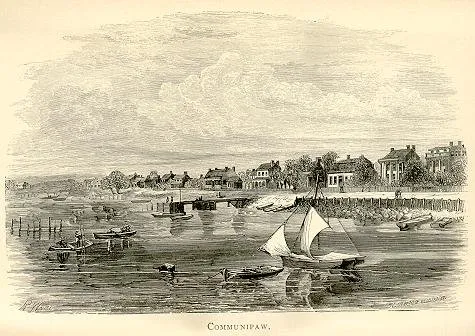
Photo: historic Jersey City waterfront tenement neighborhood 19th century immigrants, via images.squarespace-cdn.com
The gleaming residential towers that now define Jersey City's Exchange Place skyline cast long shadows—not only across the Hudson River, but across a century and a half of working-class history. Before the waterfront became a destination for Manhattan commuters and real estate investors, it was home to generations of immigrants who arrived with little more than ambition and a willingness to build something permanent in a new country. Their story is not a prelude to Jersey City's modern era. It is the foundation upon which that era rests.
The First Wave: Irish Settlement and the Labor of Infrastructure
The Irish arrived in Jersey City in significant numbers during the mid-nineteenth century, driven largely by the devastation of the Great Famine of the 1840s. They settled primarily along the waterfront and in the neighborhoods surrounding what is now Journal Square, taking work wherever it could be found—on the docks, in the railroad yards, and in the construction trades that were rapidly reshaping the region's landscape.
These men and women were not passive inhabitants of the city. They organized politically, establishing influence within the Democratic Party machine that would govern Jersey City for decades. They built parishes—most notably St. Patrick's on Grove Street, established in 1848—that served as anchors of community life and social support. The physical church buildings they erected remain standing today, quiet monuments to a community that shaped the city's civic DNA long before the term "urban development" entered the municipal vocabulary.
The Irish working class also provided the labor that made Jersey City a functional transportation node. The docks they loaded and unloaded, the streets they paved, and the rail lines they helped construct were the arteries of a regional economy. That infrastructure, largely invisible in contemporary discussions of the city's appeal, was built on the backs of men earning wages that left little margin for comfort.
Italian and Polish Communities: Paulus Hook and Beyond
By the late nineteenth and early twentieth centuries, successive waves of immigration brought Italian and Polish communities to Jersey City in substantial numbers. Italians settled heavily in the neighborhoods surrounding Paulus Hook and the downtown waterfront, while Polish immigrants established a strong presence in areas farther inland, including portions of the West Side.
Italian families built a vibrant commercial culture along streets that are today either gentrified or largely forgotten. Bakeries, barbershops, and social clubs occupied storefronts that now house artisan coffee shops or sit vacant pending redevelopment. The feast days and religious processions that once drew thousands of participants through these neighborhoods are largely gone, though a handful of organizations continue to preserve these traditions with diminishing but dedicated membership.
Polish immigrants brought with them a fierce communal identity rooted in the Catholic faith and a strong tradition of mutual aid. Polish National Alliance chapters and parish networks provided social services that municipal government did not. These organizations filled gaps that the state left open, and in doing so, they demonstrated a model of community self-sufficiency that urban planners and sociologists have since recognized as foundational to neighborhood stability.
The Anatomy of Displacement
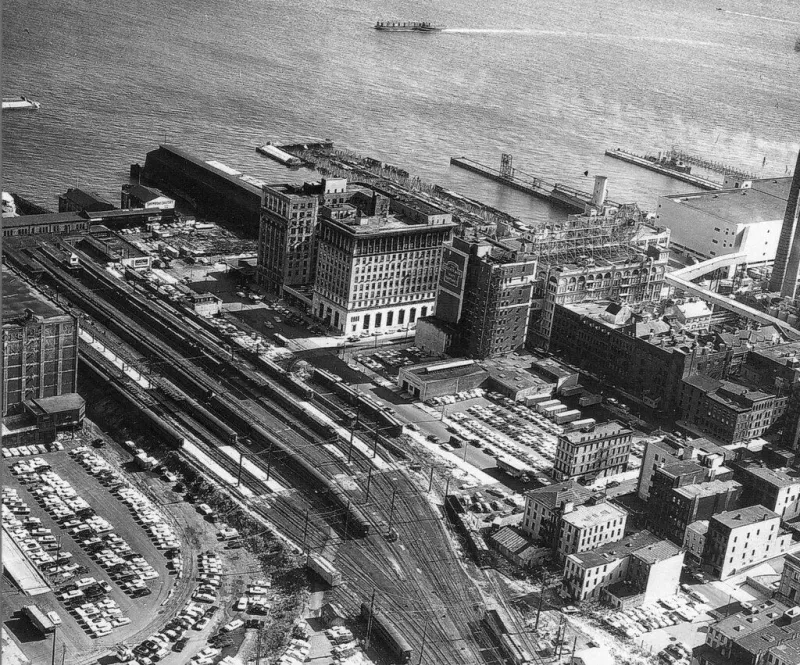
The transformation of Jersey City's immigrant neighborhoods did not occur overnight, nor did it follow a single, linear trajectory. The postwar period brought suburbanization, which drew upwardly mobile second- and third-generation immigrant families away from the urban core. The deindustrialization of the 1960s and 1970s gutted the waterfront economy, leaving behind vacant lots, abandoned warehouses, and neighborhoods struggling with disinvestment.
It was precisely this disinvestment that made Jersey City attractive to a new generation of developers in the 1980s and 1990s. Tax abatement programs, port authority redevelopment initiatives, and the extension of the PATH train system created the conditions for a real estate market that has since transformed the waterfront into one of the most expensive residential corridors in the greater New York metropolitan area.
The displacement that has accompanied this transformation is well documented and deeply felt. Long-term residents—many of them descendants of the original immigrant settlers—have been priced out of neighborhoods their families occupied for generations. Community institutions that once served as social anchors have closed or relocated. The cultural geography of the city has been redrawn in ways that largely erase the immigrant heritage that gave these neighborhoods their character.
Journal Square: A Case Study in Contested Heritage
No neighborhood better illustrates the tension between preservation and progress than Journal Square. Once the commercial and civic heart of Jersey City, Journal Square was the site of theaters, department stores, and transit infrastructure that served the entire city. The Loew's Jersey Theatre, opened in 1929, stands as perhaps the most visible emblem of this era—a grand movie palace that survived decades of neglect and is now undergoing restoration thanks largely to the advocacy of local preservationists.
The neighborhood surrounding Journal Square has become a focal point for new residential development, with high-rise towers rising within blocks of century-old row houses. The contrast is not merely aesthetic. It reflects a broader question about whose history is honored in a city's built environment and whose is quietly bulldozed to make way for the next phase of growth.
Preservation advocates have argued—with some success—that the architectural fabric of Journal Square and adjacent neighborhoods represents an irreplaceable record of the city's immigrant past. Adaptive reuse projects, landmark designations, and community land trusts have emerged as tools for mediating the conflict between development pressure and heritage conservation. Their effectiveness, however, remains uneven.
What Is Owed to the Past
The luxury waterfront that defines Jersey City's contemporary identity did not emerge from an empty landscape. It was built upon neighborhoods that immigrant communities constructed, maintained, and invested with cultural meaning over the course of more than a century. Acknowledging that history is not an argument against development. It is an argument for development that is honest about what it displaces and deliberate about what it preserves.
Jersey City's historical record offers both a cautionary tale and a source of civic pride. The communities that built this city deserve more than a footnote in its promotional literature. They deserve a place in its ongoing story—recognized in the names of streets, the preservation of buildings, and the policies that determine who can afford to remain in the city they helped create.