Forgotten Stages, Enduring Sounds: The Jersey City Clubs That Quietly Shaped American Music
In the popular imagination, the geography of American jazz and rhythm-and-blues is a familiar map: New Orleans at the headwaters, Harlem as the great metropolitan crucible, Chicago the industrial forge that hammered the blues into something electric. Jersey City does not appear on that map. It never has. Yet the evidence preserved in union ledgers, church bulletins, newspaper entertainment columns, and the recollections of aging musicians suggests that this omission is not a reflection of historical reality. It is, rather, a consequence of how history gets written — and who gets to write it.
For roughly four decades spanning the 1920s through the early 1960s, Jersey City sustained a dense and remarkably sophisticated entertainment culture centered on its African American neighborhoods, particularly the corridors along and adjacent to what residents then called "The Avenue" — a stretch of commercial and social life that has since been absorbed by urban renewal projects, highway construction, and the quiet displacement of the communities that once animated it.
The Geography of a Forgotten Scene
The physical terrain of Jersey City's music culture was shaped by the same forces that produced every other aspect of the city's African American life during the era of segregation: restricted housing, concentrated commerce, and the necessity of building parallel institutions within a narrow geography. The result was an entertainment district that, while compact, was genuinely electric.
Establishments such as the Blue Mirror Lounge, the Ritz Ballroom on Montgomery Street, and a rotating series of after-hours venues operating beneath more respectable storefronts provided performance space for musicians who moved fluidly between Jersey City engagements and better-documented gigs across the Hudson River. The proximity to Manhattan was, in one sense, Jersey City's greatest disadvantage as a historical subject: whatever happened here could always be attributed to New York's gravitational pull, its origins obscured by the assumption that real culture resided elsewhere.
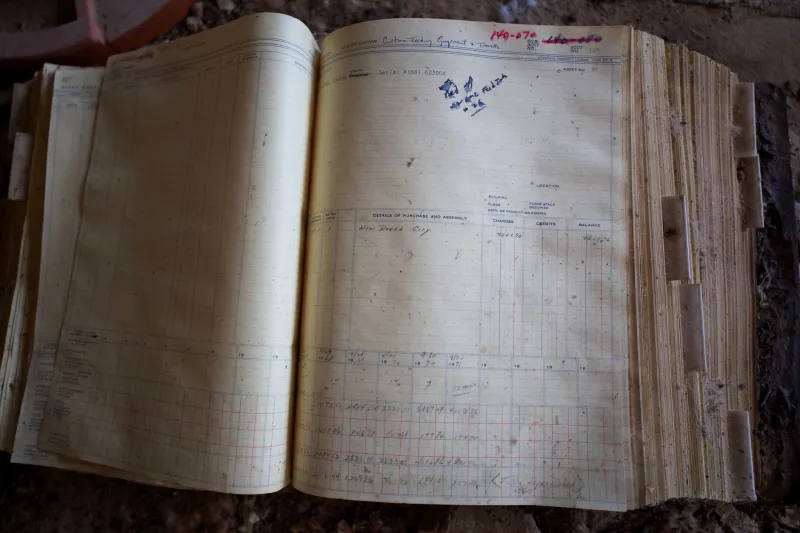
Yet local musicians and booking agents understood the distinction clearly. Jersey City crowds were knowledgeable and demanding. The venues, freed from some of the commercial pressures that governed Midtown Manhattan's more prominent ballrooms, permitted a degree of experimentation that performers valued. Several accounts from union archives — specifically the records of the American Federation of Musicians Local 16, which represented Black musicians in the region — indicate that Jersey City bookings were sought after not merely as consolation prizes when Manhattan work dried up, but as engagements with their own prestige and creative latitude.
Names the History Books Forgot
Among the figures whose careers passed substantially through Jersey City's circuit, a handful emerge with particular clarity from the fragmentary record. Organist and bandleader Calvin "Preacher" Dobbs, a Hudson County native who never achieved national recognition despite a recording session documented in a 1951 trade publication, was by multiple accounts a formative influence on younger musicians who would later find fame elsewhere. His weekly residency at a club identified in city directories only as "Harmon's" drew audiences that, according to a 1953 article in the Jersey Journal, regularly exceeded the venue's legal capacity.
Similarly, the vocal group known as the Harborlight Four — whose name gestured at the industrial waterfront that defined Jersey City's skyline — recorded at least two demonstration records at a small studio operating out of a Lafayette neighborhood storefront in the mid-1950s. No commercial release followed, but oral history interviews conducted by a Rutgers-Newark researcher in the 1980s suggest that their harmonic style directly influenced at least one singer who would later achieve regional success in the emerging rhythm-and-blues market.
These are not stories of hidden genius unjustly denied stardom. They are something more nuanced and perhaps more historically significant: evidence of a functioning, self-sustaining musical ecosystem that produced innovation continuously, whether or not that innovation was ever acknowledged beyond the neighborhood that nourished it.
The Mechanics of Erasure
Understanding why Jersey City's musical history disappeared requires attending to several overlapping processes, none of which was accidental.
The urban renewal programs of the 1950s and 1960s — federally funded, locally administered, and almost universally destructive to African American neighborhoods across American cities — dismantled the physical infrastructure of the entertainment district with particular thoroughness. Buildings that might have survived as landmarks, or at minimum as subjects of historical documentation, were cleared to make way for housing projects and highway approaches that themselves have since been reconsidered and partially demolished. The communities displaced by those clearances scattered across Hudson County and beyond, carrying their memories with them but losing the institutional anchors — the churches, fraternal organizations, and neighborhood associations — that might have preserved and transmitted those memories collectively.
Simultaneously, the recording industry's geography worked against Jersey City's legacy. Without a local label, without a distinctive regional sound that could be packaged and marketed, and without the critical infrastructure of music journalism that documented New York's scene so exhaustively, Jersey City's contributions remained invisible in the commercial record. Musicians who passed through its clubs went unchronicled. Sessions that might have been celebrated as historically significant were never recognized as such in the moment, and the moment passed.
What Survives, and What It Tells Us
The recovery of this history depends on sources that historians of popular culture have only recently begun to take seriously. Church programs listing musicians who performed at fundraising concerts. Barbershop conversations recorded decades later by oral historians with the foresight to ask. Photographs preserved in family albums that show, in the background of a birthday celebration or a church anniversary, a bandstand and a crowd that testify to a cultural life of genuine richness.
Descendants of the musicians who worked Jersey City's circuit have in several cases become active advocates for this recovery. A granddaughter of a drummer who held a long residency at a club near Journal Square has assembled a substantial private archive of photographs, handbills, and correspondence that she has made available to researchers. Her collection alone suggests that the documented history of Jersey City's music scene represents a small fraction of what actually occurred.
Local institutions have also begun, belatedly, to recognize the gap. The Jersey City Free Public Library's New Jersey Room holds scattered but valuable materials, and community archivists have in recent years undertaken oral history projects specifically aimed at documenting the entertainment culture of the mid-twentieth century before the last living witnesses are lost.
A History Still Being Written
The story of Jersey City's music venues is not, ultimately, a story about what was lost, though loss is certainly part of it. It is a story about how cities and communities generate culture continuously, regardless of whether that culture is recognized by the institutions empowered to confer recognition. The clubs along The Avenue did not wait for critical validation before producing music of genuine consequence. The musicians who filled those rooms did not require the approval of Manhattan tastemakers to develop techniques and sensibilities that would eventually reshape American popular music from a distance.
Recovering that history is an act of archival justice, but it is also something more practical: a corrective to a cultural geography that has always been more ideological than accurate. Jersey City was not peripheral to the development of jazz and rhythm-and-blues. It was, for a generation of musicians and audiences, precisely where those genres lived — on a particular stretch of pavement, in rooms that smelled of cigarette smoke and ambition, on stages that no longer exist but whose reverberations have not entirely faded.