Ground Truth: What Jersey City's Contamination Maps Refuse to Say Out Loud
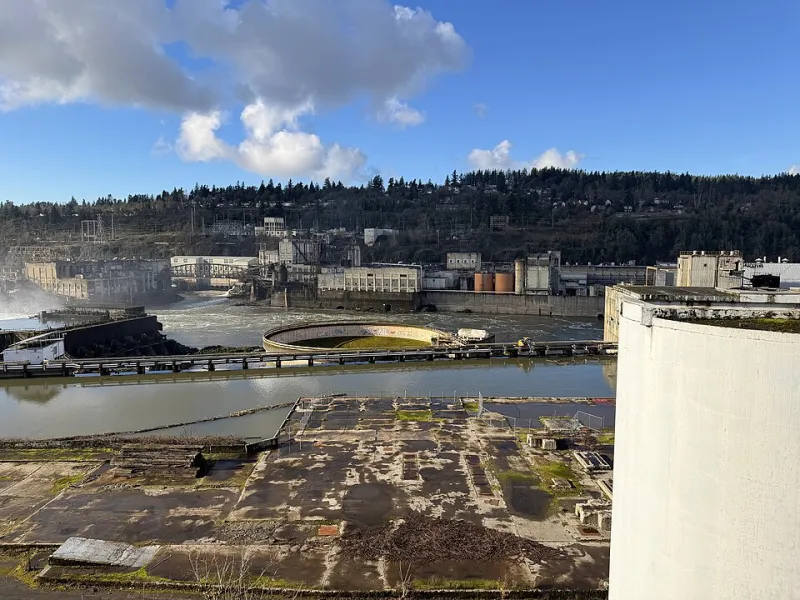
Photo: PortlandAppraisalBlog, CC BY-SA 4.0, via Wikimedia Commons
There are two maps of Jersey City, and they do not agree.
The first is the familiar one: glass towers along the Hudson, renovated brownstones in Hamilton Park, a skyline that photographs beautifully at golden hour. The second lives in state environmental databases and municipal files — a lattice of remediation sites, chromium spoil locations, petroleum plumes, and historic fill warnings, layered beneath nearly every parcel that changed hands in the last forty years.
This article takes a position that some readers will find uncomfortable: the city's celebrated redevelopment has, in substantial part, been financed by an unacknowledged transfer of risk onto the people who never had the option to leave.
Reading the Substrate
Begin with chromium. For decades, facilities processing chromite ore — much of it destined for pigments and metal treatments — left behind waste that was, in an earlier era, given away as fill. Homeowners, municipalities, and contractors spread it under foundations, into low-lying streets, across playground sites. The result, documented extensively by state regulators since the 1980s, is a residue of hexavalent chromium scattered through the soil of entire neighborhoods, most heavily on the city's east side.
Overlay the mercury legacy of the chemical and instrument works that once lined the industrial corridors. Add the petroleum plumes seeping from decades of fuel storage, refineries, and rail operations. Then add the catch-all category of 'historic fill' — a euphemism meaning that the ground itself is composed, in part, of industrial ash and unrecorded waste.
What emerges is not a map of isolated accidents. It is a portrait of a city whose very ground was an industrial byproduct.
The People Who Stayed
Data alone flattens this story. Consider the residents of neighborhoods where remediation notices arrived decades after the exposure did — letters explaining what the soil beneath a childhood yard contained. Longtime inhabitants describe a familiar pattern: health concerns raised and deflected, testing promised and delayed, cleanup schedules that stretched across generations.
There is a particular cruelty in watching one's street become fashionable. When property values rise, environmental assessment accelerates; when values were low, the contamination was a fact of life, absorbed without acknowledgment. The same chromium that made a block undesirable in 1985 made it a remediation line item in 2015, when the land beneath it could support luxury construction.
The Argument, Stated Plainly
It is fashionable to describe Jersey City's transformation as an organic revival — a city that reinvented itself through market dynamism. This narrative omits the subsidy. Developers received, in effect, discounted land whose true cost had been externalized onto public health and public coffers. Cleanup obligations were negotiated, capped, and sometimes litigated downward. The residents who bore the exposure received, in most cases, no compensation at all.
None of this required conspiracy. It required only that the two maps be kept in separate drawers.
What an Honest Accounting Would Look Like
Acknowledgment is not merely symbolic. It would mean prioritizing remediation by exposure risk rather than by development potential. It would mean public health studies that follow affected residents rather than waiting for them to sue. It would mean signage, markers, and school curricula that treat the toxic legacy as history — the same way we treat the railroads and the factories themselves.
Jersey City has always been a city built on what others discarded. The question is whether the present boom will finally put that ledger in the open, or keep the second map in the drawer a while longer.