Fire Ladders and Landlord Resistance: The Tenement Crisis That Forced Jersey City to Act
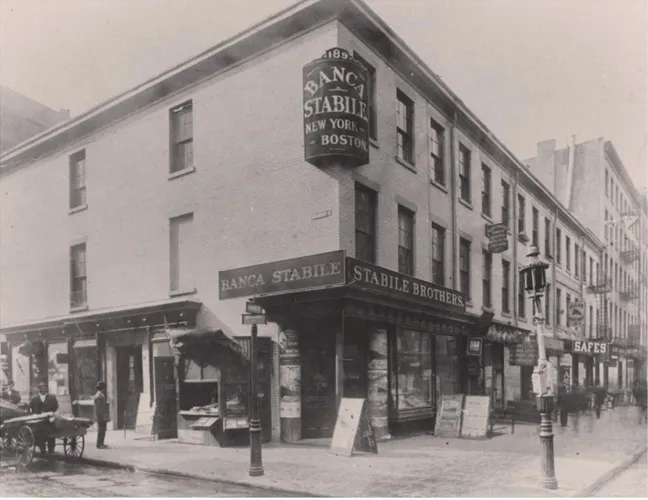
Photo: Unknown, Public domain, via Wikimedia Commons
A City Packed to the Rafters
By the opening years of the twentieth century, Jersey City's waterfront wards held some of the densest residential blocks in New Jersey. Families newly arrived from Ireland, Italy, Eastern Europe, and the American South crowded into multi-story walkups within earshot of the railroad yards and the colliery wharves. Rents were high, space was scarce, and the buildings themselves — many of them hastily framed by speculative builders in the 1870s and 1880s — were never designed for the loads they carried.
What made these tenements dangerous was not simply age. It was arithmetic. Rear tenements tucked into lots meant for single homes. Stairwells that doubled as chimneys for smoke and flame. Bedrooms opening onto light wells barely wider than a man's shoulders, where a fire on the ground floor could turn an entire shaft into a furnace.
The Deaths That Made the Papers
Every city of that era had its fires, but Jersey City's began to accumulate a record that reformers could no longer ignore. Newspaper accounts from the period describe families trapped on upper floors, residents descending bed sheets knotted together, and coroner's juries returning verdicts of "accidental death" with a regularity that began to look like negligence by design.
Muckraking journalists — following the template set by Jacob Riis's exposure of New York's tenements — found in Jersey City a smaller, sharper case study. Here was a compact city where a handful of property owners controlled hundreds of units, where the connection between landlord profit and tenant mortality could be traced block by block. Reform-minded editors printed floor plans of buildings where people had died, marking the sealed rear exits and the boarded windows with the same precision a coroner might use.
The Ordinance Battles
The reform legislation that followed — requiring fire escapes on buildings above a certain height, mandating minimum air shaft dimensions, regulating occupancy per floor — did not arrive quietly. Landlord associations organized against each proposed ordinance, testifying in City Hall that compliance costs would drive small property owners to ruin and force rents upward. Some argued, with a straight face, that fire escapes encouraged "improper nocturnal use" of roofs and balconies.
The reformers' counterargument was simple and, ultimately, decisive: a tenant's right to exit a burning building was not a matter for cost-benefit analysis. City inspectors, underfunded and occasionally bribed, were nonetheless given enforcement powers that grew year by year. Jersey City's ordinance framework, drafted in this period, tracked closely with reforms adopted in New York and eventually folded into state housing codes.
Why Jersey City Mattered
Historians of American housing policy tend to tell this story through Manhattan — the Tenement House Act of 1901, the Triangle Shirtwaist Fire a decade later. But the pattern that repeated nationally was tested in dozens of smaller industrial cities first, and Jersey City's version of the fight is instructive precisely because it was not famous.
Here, the battle was won not by a single catastrophe but by accumulation: death notices, inspection reports, the slow humiliation of landlords in the press. The tenements themselves are mostly gone now, replaced by public housing, highways, and later the glass towers of the waterfront. What survives is the legal architecture — the assumption, now so ordinary we forget it was ever contested, that a landlord's ledger does not outrank a family's lungs.
That assumption was argued into existence in rooms like the ones on Grove Street and Bergen Hill where the city's tenement commission once met. The residents who lived through those fires rarely left written accounts. The buildings that failed them left plenty.